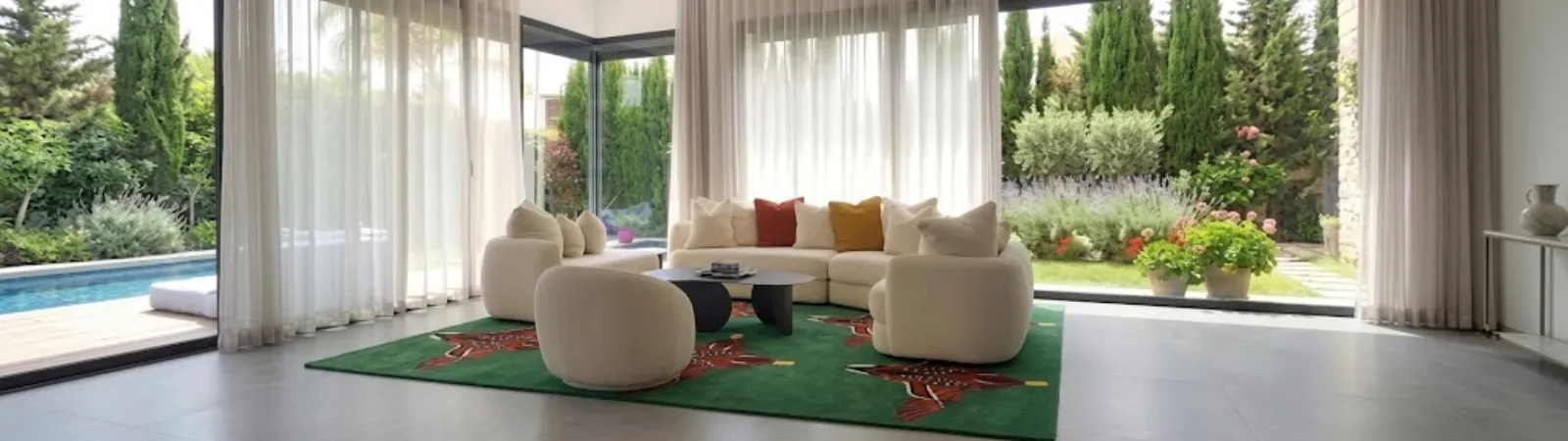
Animal Print Carpet Ideas for Living Rooms, Bedrooms & More
There’s a certain kind of room that photographs well but somehow forgets to feel like anyone lives there. Animal print
Most rooms don’t fall apart because the furniture is wrong. They fall apart because nothing on the floor is doing the heavy lifting of holding the space together. An abstract carpet can help by adding movement and texture, making a room feel considered rather than assembled.
This guide explains why designers keep reaching for abstract carpets, which rooms benefit most, and how to pick one that still looks right five years from now.
Rugs with geometric or traditional patterns are safe, but predictable. Abstract designs add visual surprise, helping a room feel considered rather than assembled from a catalog. Interior designers rely on the same instinct: pick rugs because they fit the room, not because they’re trending.
That’s one reason modern abstract carpets can work well in professionally designed rooms. They look intentional and feel more personal than a rug that just came with the furniture.
An abstract carpet tends to outlast a single design phase. Because it isn’t tied to one obvious motif, it can carry a room through several rounds of redecorating without feeling out of place.
Designers also point to versatility. An abstract pattern can range from bold and graphic to soft and painterly. This means the same broad category can suit a minimalist apartment as much as a maximalist, layered interior.
In the living room, an abstract carpet usually works best as a visual anchor. Placing it under the coffee table helps bring the sofa and chairs together into one inviting area. Since the pattern isn’t repetitive, it stands out without competing with art or other patterns in the room.
In a bedroom, the same abstract carpet works more gently. A softer, lower-contrast rug beside the bed adds texture underfoot first thing in the morning without the visual noise a bold geometric print might bring to a room meant for winding down.
For a home office or a reading nook, a smaller abstract carpet serves a different purpose entirely. Instead of anchoring furniture, it defines a zone within a larger room, with an irregular silhouette marking out a corner that would otherwise blend into the rest of the floor.
Even hallways can benefit from an abstract carpet. An abstract runner adds movement and interest to a space that’s often overlooked, making a simple walkway feel more special.
Size still matters as much with an abstract carpet as with any other rug. An abstract carpet for living room generally needs to be large enough for at least the front legs of major furniture to rest on it. The same rule applies to any patterned rugs or solid rug in the same setting.
Since there’s no repeating or fixed motif to lean on, color does more work in an abstract carpet than in almost any other rug style.
Blue abstract carpet reads as calm and a little grounded, which is why it can work well in living rooms and bedrooms built around a cooler palette. Gray pushes further into neutral territory, almost like a work of art.
Black and white abstract rugs drop color entirely and work through contrast instead, light against dark, which gives it a graphic, almost architectural feel that suits a more minimalist space.
None of these is fixed categories so much as points on a spectrum. Some abstract carpets lean loud and painterly, while others stay quiet and textural. The deciding factor usually comes down to what’s already in the room rather than the pattern itself.
Browse our abstract rugs collection to explore the full range.
An abstract carpet usually ends up as the most visually active thing in a room, which means it has to withstand a lot of looking. Construction matters more than the pattern does.
A gray abstract carpet works especially nicely against warm wood furniture, since the wood keeps the neutral tone from reading as cold.
Blue and green look calm and almost coastal next to white or cream pieces, particularly in a room that gets good natural light. With black and white, it’s usually best to keep everything else in the room fairly simple. One graphic pattern in a space reads as a statement; two competing ones just read as clutter.
A smaller abstract carpet layered over a larger neutral jute or flatweave rug adds real depth to a flat-feeling room without needing a second loud pattern.
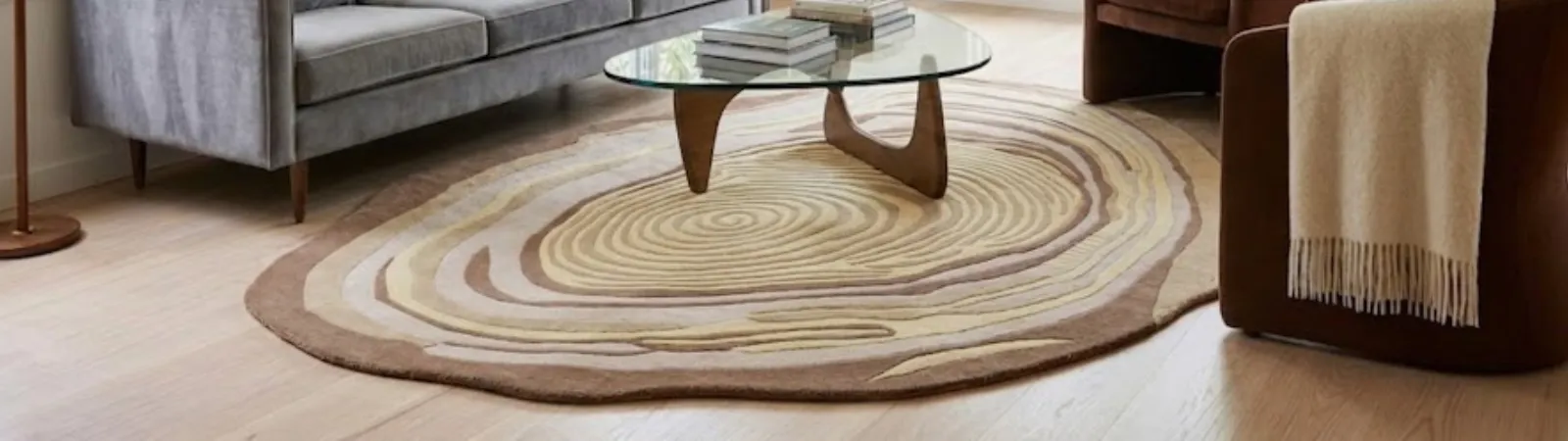
With an irregular, freeform shape, you actually want to show off the outline. That’s the reason you chose that shape. Tuck the whole thing under furniture, and you lose the point.
An abstract carpet gets looked at more than most other pieces in a room, so it has to actually hold up under that kind of attention. We hand-tuft every rug, including abstract designs, from New Zealand wool blended with viscose. The wool gives it density that doesn’t flatten out, and the viscose adds a soft sheen you don’t really get from a machine-made rug.
You can read more about what that construction actually involves in our guide to the benefits of hand-tufted rugs.
Pieces like Ocean Drift bring a modern abstract carpet feel through cool blue tones and fluid linework, while Silver Gypsy Eye uses a softer, silvery gray palette for anyone who wants the movement of an abstract print without adding more color to the room.
Every abstract carpet in the collection also carries our signature scalloped edge, which softens the outline of even the boldest pattern and keeps it from feeling too graphic or severe.
For a wider look at where the style is headed, our guide to modern abstract rug trends covers the category in more depth.
A good abstract carpet does something most furniture can’t. It changes how a room feels without anyone rearranging a single piece of furniture. The pattern that works for you probably isn’t the boldest or the quietest; it’s whichever one matches the room’s existing colors and doesn’t compete for attention in a house that’s already got a lot going on. Get the scale and the color right, and it stops being a rug you bought and starts being one you’d genuinely miss if it were gone. That’s what makes the right abstract rug feel less like an accessory and more like the detail that holds the room together.
Yes. Abstract carpets skip the rigid symmetry of traditional rug designs while complementing clean-lined modern furniture. A softer, neutral abstract print blends easily into a minimalist or Scandinavian-style room without adding visual clutter.
It can, especially with a lighter palette. A pale or low-contrast abstract print reflects more light than a dark, solid rug, which helps a small room feel more open.
Every rug is hand-tufted using New Zealand wool and viscose, which gives it enough density to hold its shape during daily use rather than flattening out after a year or two. Most designs can also be made in a custom size, while the scalloped edge gives even a bold abstract pattern a softer outline than a standard rectangular cut.
Yes. Wool rugs by Scalloped Rugs are suitable for homes with children and pets. They naturally resist staining, and the anti-slip backing keeps the rug in place through daily foot traffic. Regular vacuuming and quickly blotting up spills are really the only maintenance a busy household needs to keep on top of.
It solely depends on the specific design. A loud, saturated pattern will probably feel dated, as any bold trend eventually does. A quieter, tonal one tends to hang around longer, closer to how a piece of art ages than a piece of decor.
There’s a certain kind of room that photographs well but somehow forgets to feel like anyone lives there. Animal print
August is a quiet month in most homes. The summer routine has settled, the fall calendar hasn’t filled up yet,
Elevate your living space with designer collections.
Get
Off on Your First Order