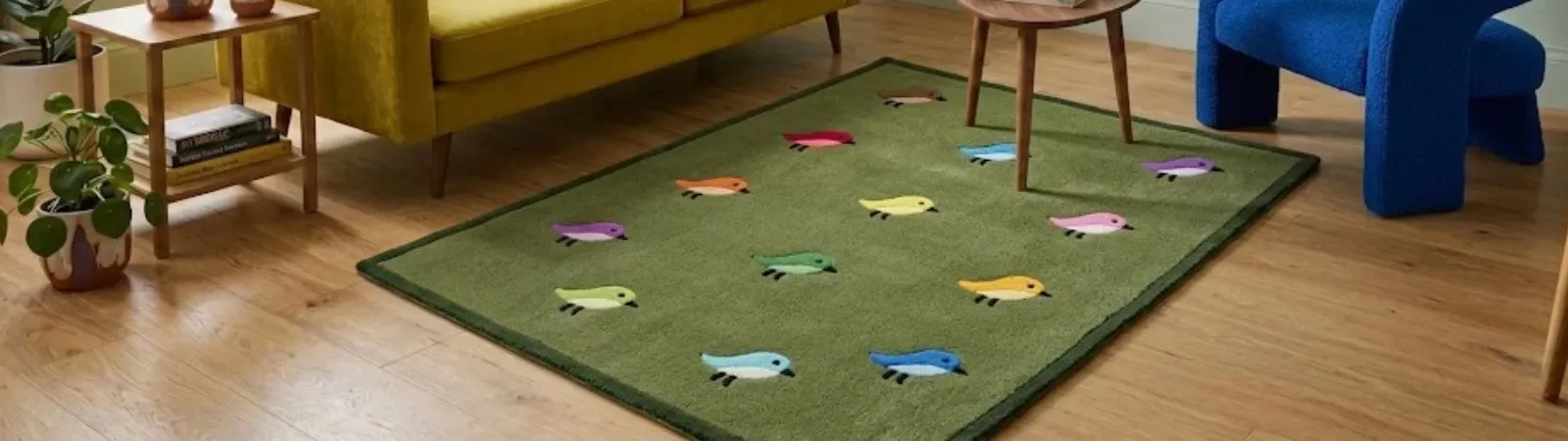
Animal Print Rug Living Room Ideas & Styling Tips
A living room rarely needs another rug. It needs one that earns its place. Animal print rug does this more
Say “animal print” to most people, and they’ll picture the same room: matching leopard curtains, a zebra throw, maybe a whole accent wall doing the same thing. That’s a fair mental image, and it’s also mostly stuck in the 1980s.
The current version looks different. A single rug can do the work that curtains, upholstery, and wallpaper used to split between them, and everything else in the room stays deliberately plain around it.
More than most people would guess. 1stDibs tracks this every year in their designer trends survey, and the 2025 numbers show something worth noting: modest growth in designers planning to use leopard and other animal motifs, with the appetite running even stronger outside the U.S. It’s nowhere near as common as plain linen or bare wood tones yet, not close. But it’s been climbing steadily since 2023, not spiking for a season and disappearing the way most print trends do.
What’s actually changed isn’t the numbers so much as how designers talk about it. There used to be a disclaimer attached to leopard, something like “bold choice, use sparingly.” That disclaimer’s mostly gone. Now it gets mentioned in the same breath as a jute rug or a plain linen sofa, a starting point to build a room around rather than something you need to justify. Which tracks, in a way. Leopard spots and zebra stripes were never invented colorways to begin with. They’re lifted straight off the animal, and that’s probably why the palette- all that brown, cream, black, the occasional gray- sits so comfortably next to the timber, stone and linen most people already have in their homes.
Placement decides whether it works. The print itself is almost secondary. A single leopard rug in an otherwise quiet living room looks deliberate. The same rug next to zebra curtains and a cheetah throw cushion looks like someone raided three different sample books, and not in a good way.
The living room is the natural starting point, usually because it already has a rug that does very little. Swap it for something with pattern and the seating area suddenly has a focal point, without needing anything else in the room to change. Bedrooms work almost as well for a similar reason: a plain bedroom floor is one of the quieter parts of the room, so a leopard or zebra rug next to the bed does a lot of work for not much effort.
Entryways and hallways don’t get much design attention, which is exactly why a bold rug works so well. There’s usually nothing else going on in that stretch of floor, no furniture, no other pattern, just whoever walks through the door. A leopard or zebra rug there gets noticed precisely because it doesn’t compete with anything. A home office or reading corner works the same way, minus the foot traffic: one accent chair in leopard velvet, and a purely functional room suddenly has a point of view.
The trouble starts when the print shows up everywhere at once. Wallpaper, upholstery, and a matching leopard rug can turn a room into a costume rather than a home, and costumes are a lot more fun to visit than to live in.
If there’s a low-risk entry point into this trend, it’s a rug, and it’s one of the most sensible animal-print decor ideas for anyone who isn’t ready to commit to a reupholstered sofa or a feature wall. A rug sits underfoot, under furniture, at the edge of your line of sight rather than dead center, so it’s far more forgiving than a patterned sofa. A bad sofa choice is nowhere to hide. A rug has plenty of room to hide.
It’s also just easier to undo. Move, redecorate, get tired of it, and a rug rolls up and goes into another room, or gets sold on. Try doing that with wallpaper.
Color really decides how the rug behaves in the room. Warm cream, caramel and soft brown- the usual leopard palette- sits close enough to natural wood and tan leather that it barely reads as a “statement” at all. Black-and-white zebra is the opposite. High contrast, more graphic, closer to architecture than nature, it tends to suit sharper, more contemporary rooms than softer leopard tones.
Bring Bold Animal Prints Into Your Home
Give your living room or bedroom a fresh look with animal print rugs that bring character, warmth, and artistic detail to your space.
Animal print isn’t the only way to bring a bold rug into a room, and it’s worth seeing how it compares with other statement styles before settling on one.
| FEEL | WORKS BEST WITH | GOOD FOR | |
|---|---|---|---|
| Leopard | Warm, close to a neutral | Wood tones, brass, leather | First-timers trying leopard print interiors without much risk of clashing |
| Cheetah | Leopard’s tidier cousin, solid spots | Same as leopard, slightly cleaner lines | Anyone after modern cheetah print room ideas without leopard’s busier rosettes |
| Zebra | High contrast, graphic rather than natural | Black-and-white kitchens, monochrome living rooms, matte black hardware | Rooms with a sharper, more contemporary edge |
| Cowhide | Rustic, earthy, less polished | Timber, wicker, linen | Farmhouse or boho interiors, not sleek ones |
| Abstract/geometric | Same visual punch, no literal animal reference | Rooms with other organic patterns already in play | When a literal print risks competing with what’s already there |
Find a Rug That Makes a Statement
Explore statement rugs designed to add personality to your interiors, whether you prefer bold patterns, artistic shapes, or distinctive textures.
Edges matter more than people expect with a print like this. Cut leopard spots into a plain rectangle, and the rug can look like fabric sized to fit the floor, nothing more. Give it a sculpted, hand-carved border instead, and suddenly it looks chosen. That distinction counts for more with animal print than any other pattern, because a soft or blurred edge is exactly what turns a leopard rug into something you’d mistake for a bath mat from across the room.
Our animal print rugs are hand-tufted in a wool and viscose blend, with the same hand-carved borders that run through the rest of our collection, so the shape holds instead of dissolving into the floor around it.
If animal print isn’t quite settled yet, our statement rugs cover more ground, and the patterned area rugs are worth a look too, especially if what the room actually needs is something geometric or abstract rather than literal.
Animal print earned its way back by being used with a lot more restraint than it was last time. One rug. A single chair. A cushion, even, if that’s as far as anyone wants to take it. Leopard and cheetah bring the warmer, blended end of it; zebra brings the contrast. Either way, the pattern works best when it’s the one thing in the room doing the talking; everything else can afford to stay quiet.
Yes, more naturally than people expect. Its warm, muted coloring reads as texture rather than clutter, so a single leopard rug or chair can sit inside an otherwise spare, neutral room without throwing the whole thing off. The catch is restraint everywhere else—one leopard piece, not two or three.
Zebra can work particularly well for modern spaces. The strong black-and-white contrast complements the clean lines and monochrome palettes common in contemporary furniture, so a zebra rug or hide chair tends to look planned rather than out of place next to something sleek and minimal.
Living rooms and bedrooms are the most forgiving, since there’s usually enough room for the rug to sit under furniture without competing against other patterns. Entryways work well too: small space, big first impression. Steer clear of rooms that already have a strong pattern in the upholstery or wallpaper.
Solid, neutral upholstery is an easy place to start: linen, leather, or velvet in cream, tan, camel, or black. Natural materials like wood, rattan, and stone also complement animal-print furnishings well, since the pattern’s palette already leans earthy. If you want to bring in another pattern, keep it to one, and keep it in a different part of the room.
It’s one of the easier patterns to fold into a neutral room, mostly because leopard and cheetah tones already exist within most neutral palettes. A rug or cushion can add depth and warmth to a beige or greige room without dragging in a color that fights everything else.
Start with one piece, usually the rug, since it grounds the room without asking for attention from every angle. Keep the sofa and chairs solid and complementary, add wood or linen for texture, and don’t repeat the print anywhere else in the room. One piece reads as intentional. Three or four starts to look like a theme park.
A living room rarely needs another rug. It needs one that earns its place. Animal print rug does this more
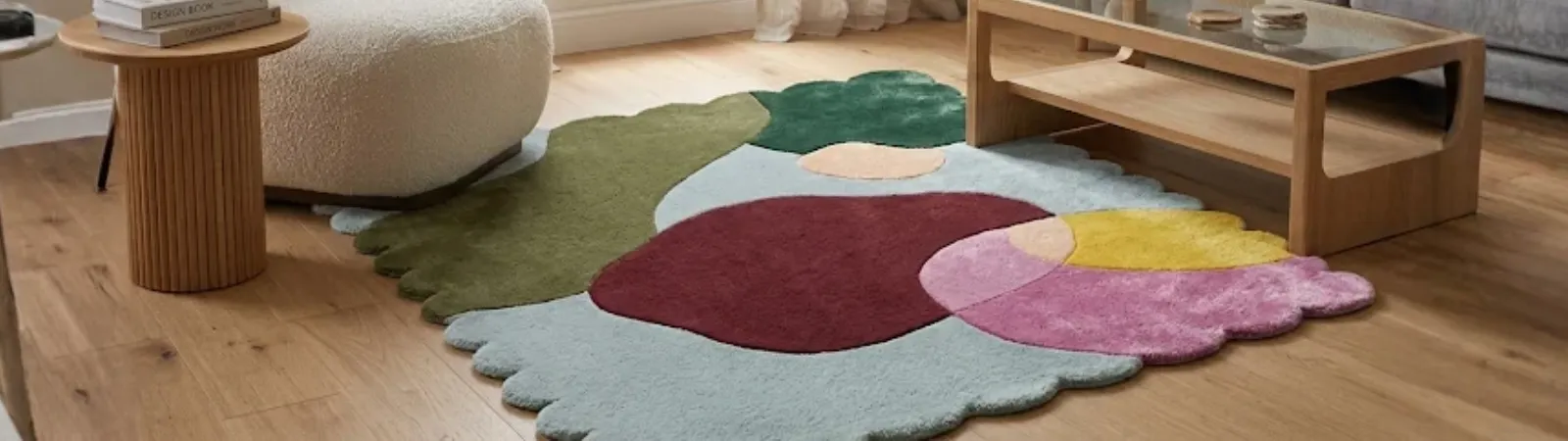
A large living room can have all the right furniture and still feel unfinished. The sofa is there. The coffee
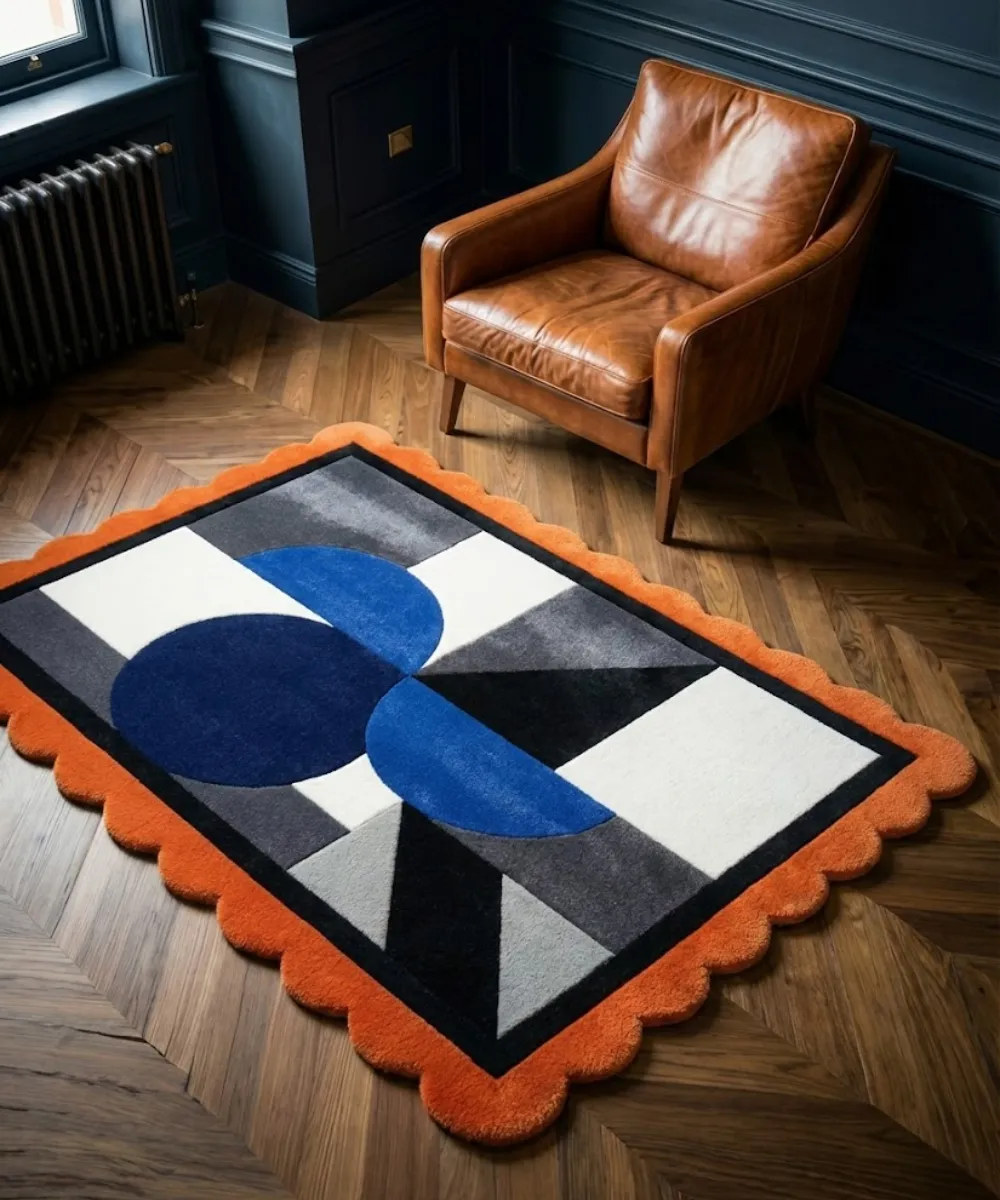
Elevate your living space with designer collections.
Get
Off on Your First Order