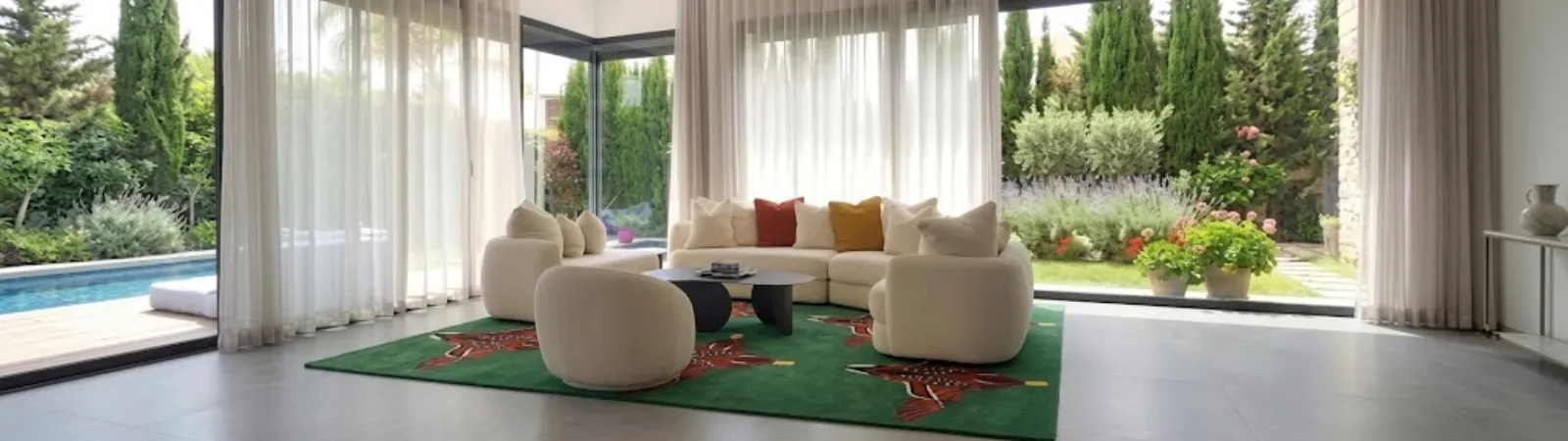
Animal Print Carpet Ideas for Living Rooms, Bedrooms & More
There’s a certain kind of room that photographs well but somehow forgets to feel like anyone lives there. Animal print
Rugs have a funny way of being the last thing people think about, and the first thing they notice when a room feels off. You can rearrange the furniture, repaint the wall, and yet, something is off. Then someone points to the rug, and suddenly it all makes sense. The issue is not always the color or pattern. More often, it is the shape.
That is the conversation more homeowners are having, and it is why irregular-shaped rugs have shifted from niche design circles into everyday interiors. The shapes were always out there. What changed is that people stopped defaulting to rectangles without asking whether a rectangle was actually the right call.
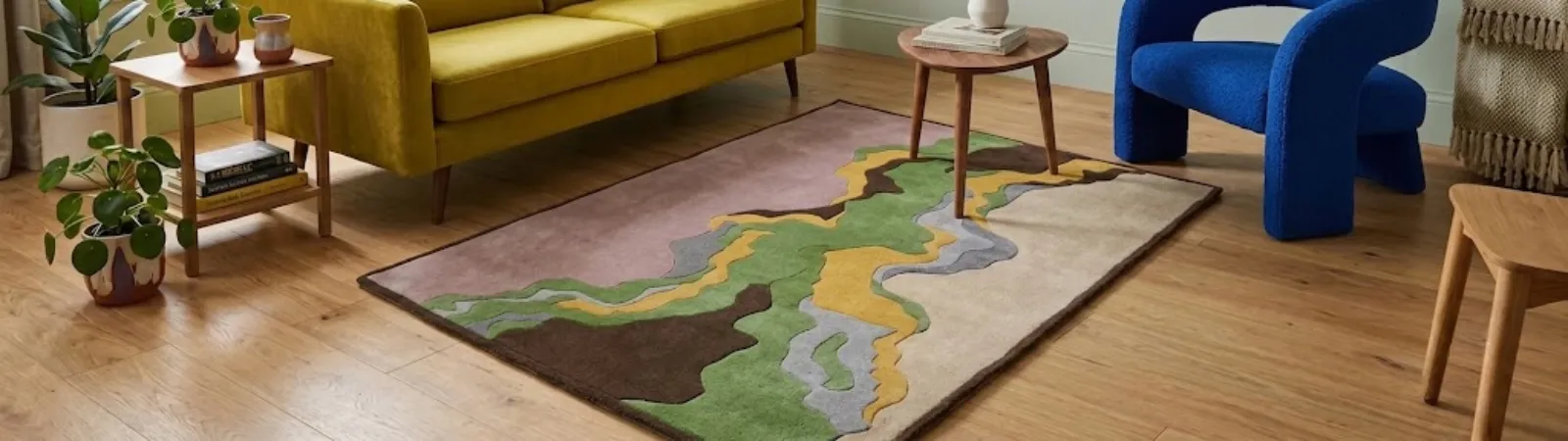
Spend ten minutes looking at irregular rug shapes, and you realize the category is wider than the name suggests. These are pieces with soft, nature-drawn outlines, something between a smoothed stone and a botanical silhouette. There are others with harder, more deliberate geometry: stepped edges, angular cuts, broken profiles that sit against straight-lined furniture, like visual interruptions rather than complements. And there is everything in between.
The thing that connects them is not the shape itself but what the shape does. On a standard rectangle, the outline is invisible. Nobody looks at the edge of a rectangular rug; it just ends. On an irregular-shaped area rug, the outline is part of what you are looking at. It carries weight, marks territory, and gives the floor a presence that no amount of pattern on a straight-edged piece can replicate.
At ScallopedRugs, the irregular rug collection spans botanical, geometric, abstract, and fluid organic forms, hand-tufted in New Zealand wool.
Alexandra Barker, speaking to Livingetc, said something worth holding onto: irregular shapes bring the rug to the foreground rather than leaving it as a background character. They change how you walk through a space, how you zone it, and how the eye reads what is there. That observation has been backed up repeatedly by designers, trend analysts, and sales data through 2024 and into 2025.
Some of it comes down to how modern homes are laid out. Open-plan living combines a kitchen, dining area, and sitting room on a single floor, with no walls separating them. Furniture groupings alone do not create enough definition. A place within a seating zone creates a boundary that the eye reads clearly, without a partition, a screen, or any structural change to the room.
Ready to find a shape that actually fits your space? Browse the full irregular rug collection.
Irregular rug shapes work across most rooms, but the reasons change depending on where they go.
Most retailers add irregular shapes to an existing conventional range as an afterthought. ScallopedRugs started from the shape outward.
The collection runs from 2×3 ft accent pieces to 12×18 ft, with options across every room type in between. Hand-tufted New Zealand wool throughout: the fiber compresses and springs back underfoot rather than packing flat after months of daily use, which is the practical difference between a rug that holds up and one that does not.
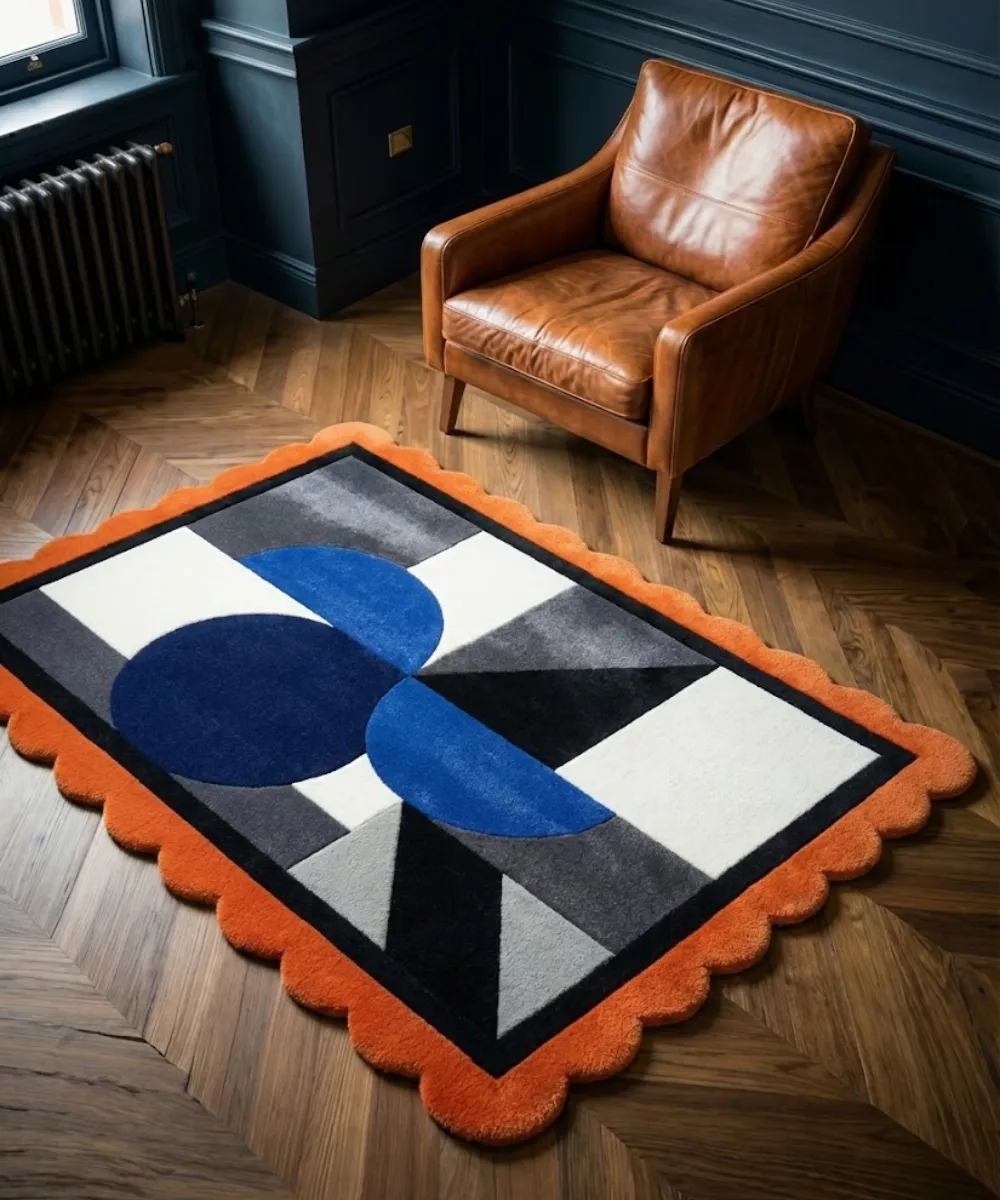
The scalloped edge is tufted into the construction from the beginning, not sewn on as finishing trim. It holds its outline through cleaning and regular foot traffic without the fraying that applied borders develop over time.
Designers are no longer thinking of rugs as simple floor coverings. Instead, they are approaching them as a form of floor-level architecture that helps shape the entire room. Rather than filling space, unique area rugs are being designed to define it.
Color is settling into grounded territory: amber, moss, terracotta, deep aubergine. Pattern is pulling back from repeat motifs toward single, atmospheric compositions that read as a whole rather than a sequence.
The broader shift is toward things that feel made. Hand-tufted construction, materials with a traceable origin, and shapes that could not have come off a production line. That is where the irregular-shaped rug sits squarely in that direction.
If the room feels like it is missing something and you have already tried everything above the floor, the floor is probably where to look next.
An irregular-shaped rug will not suit every room. In spaces with formal symmetry or very traditional furniture, a standard shape often holds up better. But in the majority of modern homes where the layout is relaxed and the goal is a space that feels lived in rather than assembled, the shape does work that a rectangle cannot.
Browse irregular rugs and filter by size or form to find what the room is asking for.
There’s a certain kind of room that photographs well but somehow forgets to feel like anyone lives there. Animal print
Most rooms don’t fall apart because the furniture is wrong. They fall apart because nothing on the floor is doing
Elevate your living space with designer collections.
Get
Off on Your First Order