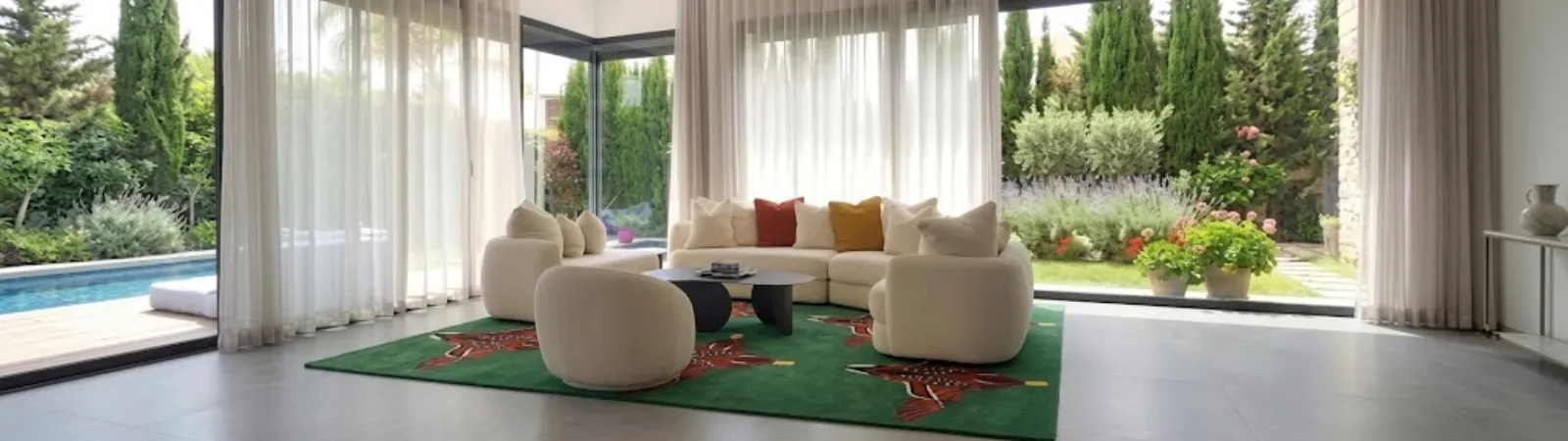
Animal Print Carpet Ideas for Living Rooms, Bedrooms & More
There’s a certain kind of room that photographs well but somehow forgets to feel like anyone lives there. Animal print
Some elements in a room grab your attention immediately, while others quietly shape the entire experience. Flooring falls into the second category. It covers the largest surface in the space, influences how light moves through a room, and creates the foundation for every design choice that follows.
One of the easiest ways to add character and softness to that foundation is with a rug. Among the many styles available today, organic-shaped rugs have become increasingly popular for their ability to break up rigid lines and bring a more relaxed, natural feel to a space. Before exploring the different shapes and styles, it’s worth understanding what makes a rug organic and whether it’s the right fit for your home.
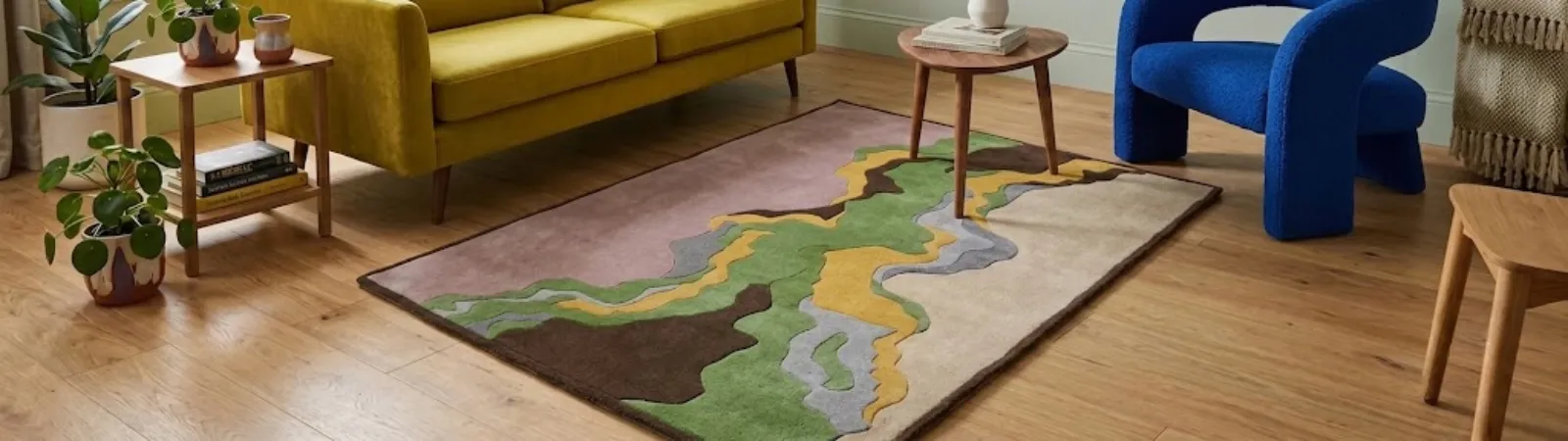
The simplest way to explain it: an organic-shaped rug doesn’t have corners in the traditional sense. Instead of the usual rectangle or square, the shape is drawn from nature. Think the curve of a riverbank, the outline of a smooth pebble, the scalloped edge of a seashell. The silhouette flows rather than stops.
“Worth noting here: organic refers to the shape, not the material. A rug can be made from synthetic fibers and still be organic in form. The word describes how the edges move, not what the pile is made from.“
The organic modern rug trend has grown out of a larger shift in interiors. People are moving away from rooms that feel sharp and staged. They want spaces that breathe a little. Curved furniture, arched doorways, softened corners – the organically shaped rug fits right into that shift. It’s one of the easier changes to make, and the impact tends to be immediate.
Organic-shaped rugs aren’t one thing. The category covers quite a range, and the right style depends on the room and what you’re going for. Here’s how the main types differ.
For a deeper look at how these shapes differ from standard formats, our scalloped edge rug guide covers the full range.
Upgrade Your Interior with Organic Shapes
Explore unique rug designs inspired by nature and modern living.
The honest answer to why people choose modern organic rugs over a plain rectangle? The room just looks better. But there’s more to it than that. The benefits show up in both the look and feel of the space.
Most living spaces are full of hard angles. Walls meet at 90 degrees, sofas are rectangular, and coffee tables have corners. An organic-shaped rug introduces a silhouette that doesn’t follow any of that, and the contrast is surprisingly effective. The room feels less rigid. More lived-in. The geometry stops competing with itself.
One thing that surprises people is how well these travel across different interior styles. Japandi, coastal, maximalist, Scandinavian – an organic-shaped rug doesn’t really belong to any of them specifically, so it rarely feels out of place in any of them either.
That same quality helps in open-plan spaces too. In a larger room, this rug can define one area without making the whole space feel chopped up. In a smaller room, it can add interest without adding clutter. Where a rectangular rug can make a room feel rigid, an organic one tends to let the space breathe a bit more.
And beyond all the practical stuff, there’s something about an organic modern rug that feels considered. It signals that someone thought about the room rather than just filling it.
Here’s how an organic-shaped rug can work in different areas of your home, along with a few styling tips for each:
For more room-specific ideas, explore our curated range of rugs for each room.
A rectangular rug is dependable. It fits most rooms, works with most furniture, and rarely causes any problems. That’s nothing. But dependable isn’t the same as interesting.
An organic-shaped rug asks something slightly different from a space. It introduces a shape that doesn’t repeat anywhere else in the room. It creates a moment. Whether that moment is subtle, a gentle scalloped edge in a neutral tone, or more dramatic, like a bold freeform silhouette, it always adds something a rectangle can’t.
That said, there are rooms where a traditional rug makes more sense. A formal dining room with a large rectangular table is one of them. Another is a very classic, symmetrical space with period furniture. The organic option doesn’t fit everywhere equally well.
But for most contemporary homes, especially those already working with natural materials, relaxed proportions, or a mix of old and new, an organic-shaped rug will almost always be the more rewarding choice. The difference between the two often comes down to this: a rectangle fills a space. An organic-shaped rug gives it something to say.
Comparing specific styles? Our guide on irregular rugs vs traditional rugs is worth a look.
Discover statement rugs that blend artistic design with everyday comfort.
Finding a rug that actually does what you need it to do is harder than it sounds. Most options are either well-made but boring or interesting-looking but not built to last. ScallopedRugs sits in a different spot entirely, and once you spend a little time with the collection, it’s fairly obvious why people keep coming back.
The rugs are hand-tufted in New Zealand wool. That’s not a throwaway detail. New Zealand wool is denser and more resilient than most alternatives, which means the rug keeps its shape after years of furniture sitting on it and people walking across it.
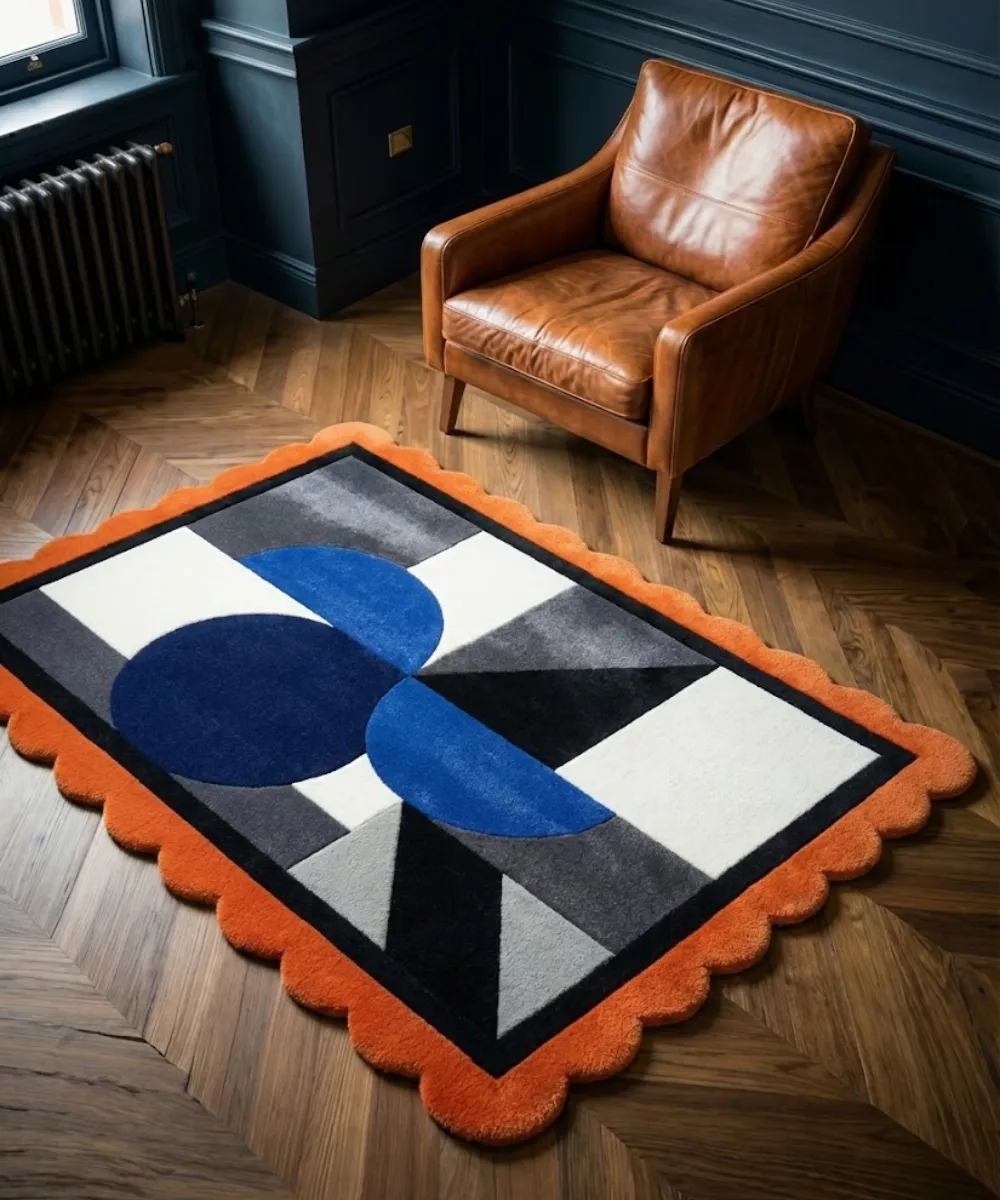
The scalloped edge is what most people recognize first. That repeating arc along the border is finished by hand, and you can tell. There’s a consistency to it that machine-cut edges don’t have, but also a slight variation that makes each piece feel like its own thing. It’s a small distinction and also a meaningful one.
The range goes well beyond the scalloped edge, though. Botanical-inspired designs, freeform irregular shapes, abstract organic patterns — the collection covers enough ground that you’re not locked into one look.
Practical side: every handmade rug ships with anti-slip backing, the dyes are colorfast and hold well over time, and custom sizing is available for rooms that don’t work with standard dimensions. That is genuinely useful if you’ve ever measured a room and come up short with every option online.
The full collection can be browsed by shape, size, color, or room at scallopedrugs.
An organic-shaped rug is a small change with a disproportionate effect. It softens a room’s geometry, introduces a reference to the natural world, and adds the kind of considered detail that makes a space feel genuinely put-together rather than just furnished.
The right rug doesn’t fill a room. It completes it. If you’ve been looking for the piece that pulls everything together, this is usually a good place to start.
Explore the ScallopedRugs Collection
There’s a certain kind of room that photographs well but somehow forgets to feel like anyone lives there. Animal print
Most rooms don’t fall apart because the furniture is wrong. They fall apart because nothing on the floor is doing
Elevate your living space with designer collections.
Get
Off on Your First Order