10 Best Area Rugs in July 2026: Modern, Luxury & Affordable Picks
Shopping for rugs always sounds simple until you’re actually doing it. You open a few tabs, scroll past a hundred
Buying a rug without measuring first is one of those decisions that feels fine right up until the delivery arrives. The rug goes down, the furniture goes back, and something is off. Usually, the culprit is size.
The good news is that there are a handful of standard rug sizes that work across most room types. This rug size guide covers all of it, placement rules, room by room, with actual dimensions rather than vague advice about what “feels right.”
A well-fitting rug changes how a room feels the moment you walk in. It connects the furniture, creates balance, and makes the layout feel intentional instead of unfinished. When the size is wrong, even a beautiful rug can feel out of place.
If the rug is too small, the seating area feels disconnected. Chairs and sofas appear to float rather than anchor the space together. A 3×5 rug in a full living room is one of the most common sizing mistakes. If the rug is too large, it can overwhelm the layout and extend too close to the walls, making the room feel visually crowded.
Most rugs fall into a handful of standard sizes that have become common because they map well to typical room and furniture dimensions. Here is how each one generally performs:
| Rug Sizes | Best For | Placement Note |
|---|---|---|
| 3×5 | Entryways, small kitchens, beside a bed | Works as an accent; not suited to anchor full seating groups |
| 4×6 | Small dining areas, reading nooks, and home offices | Fits well under a small table or a single armchair grouping |
| 5×7 | Mid-size living rooms, smaller bedrooms | Gets the front legs of a sofa on; leaves a clean floor border |
| 5×8 | Standard living rooms, queen bedrooms | One of the most versatile standard rug sizes in common use |
| 6×9 | Larger living rooms, master bedrooms | Fits all furniture legs on; works well in open-plan spaces |
| 8×10 | Spacious living and dining rooms | Defines the full zone; allows all legs on comfortably |
| 9×12 | Large open-plan rooms, grand dining rooms | Makes a strong statement; works where ceilings are generous |
| Runner | Hallways, galley kitchens, beside beds | Width typically 2–3 ft; length should leave wall clearance |
Custom-size rugs are often the best solution when standard dimensions do not fit the space properly. Unusual room shapes, bespoke furniture, or specific architectural features sometimes call for a rug that is built to the space rather than the other way around.
The most reliable method is the tape measure on the floor. Before you look at a single product, lay tape or masking paper on the floor in the approximate dimensions you are considering. Live with it for a day. Walk around it. Sit where you would sit. You will know within about ten minutes whether the footprint works.
The size question and the style question usually get answered separately, which is where a lot of people end up with a rug that fits but doesn’t belong, or belongs but doesn’t fit. Scalloped Rugs approaches both together, helping you find a rug that feels balanced in both size and style.
The rugs-by-size section lets you filter by actual dimensions rather than browsing through hundreds of options and guessing at scale. What sets the collection apart is that size comes with considered design. These are not filler pieces scaled up or down to hit a price point. Each rug is chosen for how it behaves in a room, from the pile weight and pattern scale to the edge finish across larger dimensions.
Measure twice, then size up from whatever feels safe. That one habit fixes most sizing mistakes before they happen.
Standard rug sizes exist because furniture follows predictable patterns. A 5×8 fits most sofas. An 8×10 works under most queen beds. Use those as starting points, not rules. When stuck between two sizes, go bigger.
Browse our collection by rug sizes. For styling ideas beyond sizing, the scalloped rug guide is worth reading alongside this.
Shopping for rugs always sounds simple until you’re actually doing it. You open a few tabs, scroll past a hundred
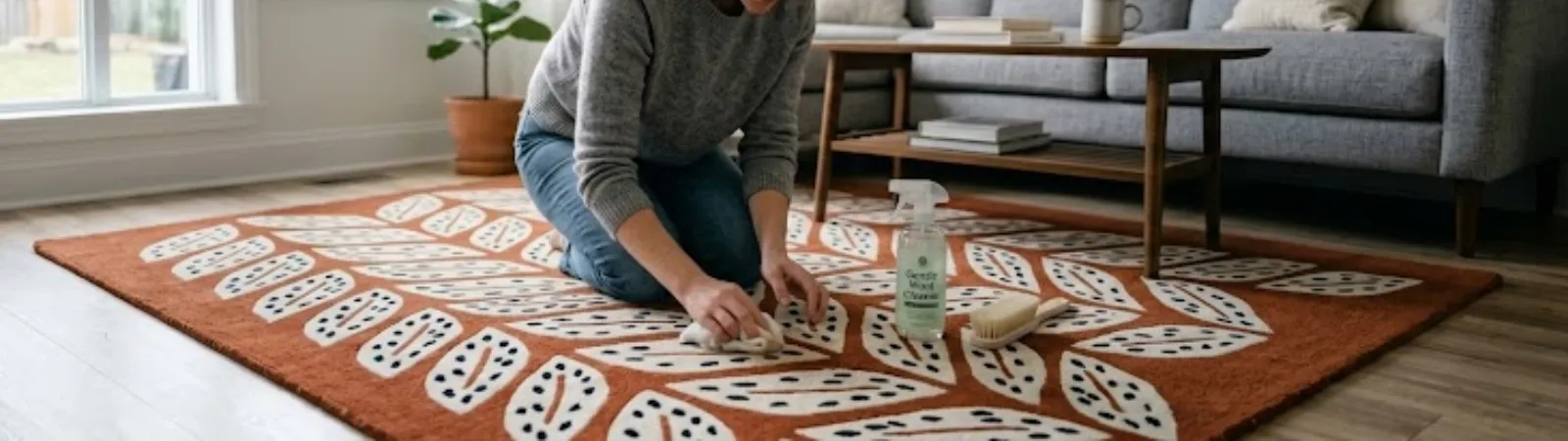
A wool rug is a forgiving investment in a home. Wool naturally resists dirt and stains better than most synthetic
Elevate your living space with designer collections.
Get
Off on Your First Order