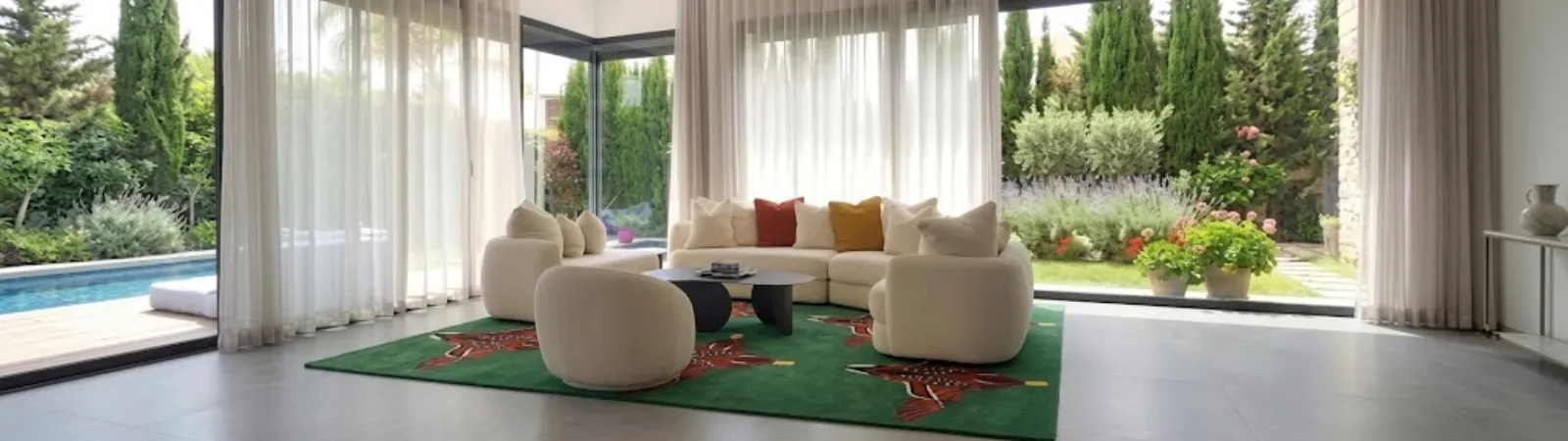
Animal Print Carpet Ideas for Living Rooms, Bedrooms & More
There’s a certain kind of room that photographs well but somehow forgets to feel like anyone lives there. Animal print
A wool rug is a forgiving investment in a home. Wool naturally resists dirt and stains better than most synthetic fibers because lanolin, a natural oil, coats the fibers and slows how quickly dust and spills settle. That resilience is why wool rugs can last for decades with the right care.
“The right care” looks different for wool than for a synthetic or machine-made rug. The wrong cleaning method can permanently damage the same fibers that resist everyday dirt.
This guide explains what makes wool different, which supplies are worth keeping on hand, and the steps for cleaning a wool rug without shortening its lifespan.
Wool is a natural protein fiber, not a plastic-based one, and that difference matters more than most people expect when it’s time to clean it.
Three things in particular can damage wool rugs permanently:
None of this means wool is fragile. Wool responds badly to being treated like a synthetic rug. A gentle, low-moisture approach protects the investment, while an aggressive one, such as hot water, harsh chemicals, or a scrub brush, can undo years of good care in a single afternoon.
A premium rug deserves premium care. Explore our Featured Rugs collection to discover handcrafted designs made to elevate your home for years to come.
Most of what you need to clean wool area rugs is already in a cleaning closet, with one or two wool-specific additions.
Skip anything marketed as an all-purpose carpet shampoo unless the label confirms it’s safe for wool. Many standard formulas are alkaline enough to damage fibers over repeated use, so choose carefully before you start.
Cleaning a New Zealand wool rug well isn’t complicated, but it helps to follow the steps in order rather than jumping straight to a stain. Here’s the full process for cleaning a wool rug, from everyday upkeep to handling a fresh spill.
Looking for a rug that’s loved by homeowners? Explore our Best Sellers collection and discover the handcrafted designs our customers choose time and again.
Most damage to a wool rug isn’t caused by heavy use; it’s caused by well-meaning cleaning attempts that go wrong. Here are the habits most likely to do that, so you know what to watch for before they become a problem.
Drying matters just as much as the cleaning itself, since wool that stays damp for too long is where most of the real damage happens.
After spot cleaning or a deeper wash, blot the treated area with dry towels to pull out as much moisture as possible before air drying. Then point a fan at the rug or move it to a well-ventilated room to speed drying instead of letting it sit damp for hours. Keep the rug flat during this process rather than folded or rolled, since trapped moisture in a folded rug invites mold or mildew.
Avoid drying a wool rug in direct sunlight or with a heat source like a hair dryer or heater. The goal is to remove moisture at room temperature, not to rush it with heat that can shrink the fibers.
Wool rewards a light touch. Regular vacuuming, prompt attention to spills, and occasional professional deep cleaning go a long way toward keeping your home clean. Get the basics right: cool water, gentle products, proper drying, and a good wool rug will outlast almost anything else in the room. Finish by checking the rug once dry and rotating it as needed to keep wear even.
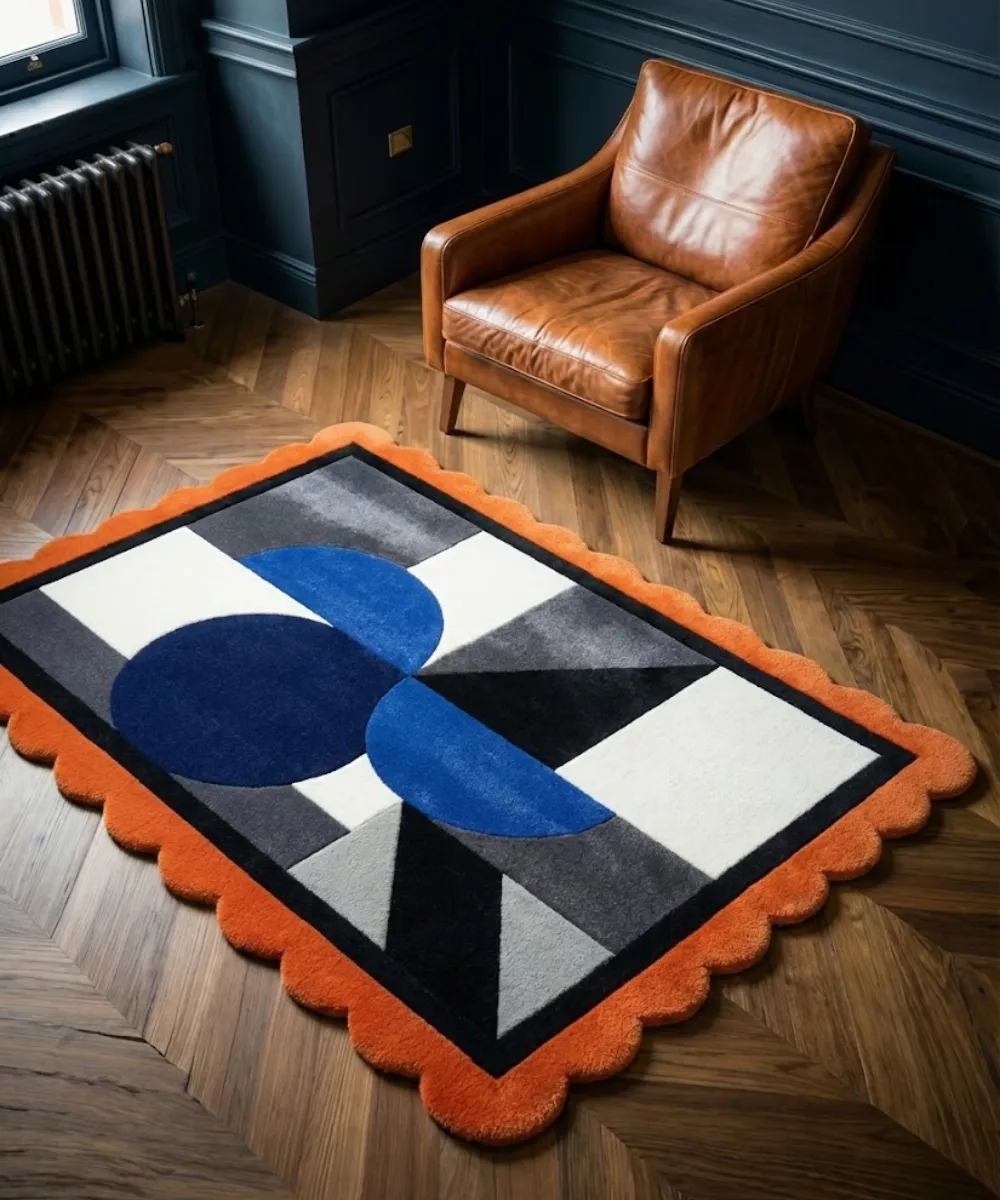
Whether your rug is a classic rectangle or one of the more irregular, sculptural shapes that have become popular lately, the same core cleaning principles apply regardless of silhouette.
Most wool rugs benefit from a professional deep clean roughly once a year, or every 12 to 18 months in high-traffic areas. Regular vacuuming and spot cleaning at home cover day-to-day maintenance, but a professional clean reaches embedded dirt that home methods generally can’t.
Every Scalloped Rugs piece is hand-tufted using premium New Zealand wool blended with viscose. The wool provides durability and structure, while the viscose adds softness and a subtle sheen, giving the finished rug both resilience and a refined look.
Yes. Most designs in the collection can be made to custom dimensions in addition to standard sizes. Once the details are finalized, production typically takes three to four weeks. If you’re not sure which size fits your space, our rug sizing guide walks you through measuring your room and furniture layout before ordering.
Generally, no. Steam introduces both heat and moisture, which are the two things most likely to shrink or felt wool fibers. Cool-water spot cleaning or a professional wool-safe cleaning service is a safer route than a steam cleaner, even one marketed as suitable for rugs.
Yes. Alongside the rug itself, care guidance is available to help new owners maintain their wool rug properly from day one, covering vacuuming frequency, spot cleaning, and general handling specific to hand-tufted wool construction.
There’s a certain kind of room that photographs well but somehow forgets to feel like anyone lives there. Animal print
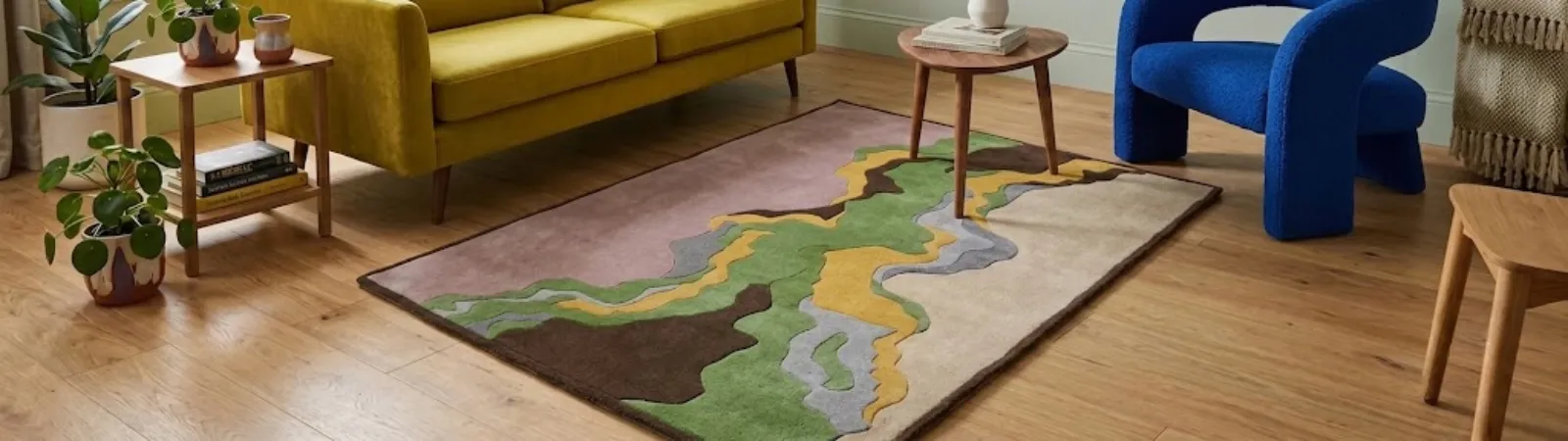
Most rooms don’t fall apart because the furniture is wrong. They fall apart because nothing on the floor is doing
Elevate your living space with designer collections.
Get
Off on Your First Order