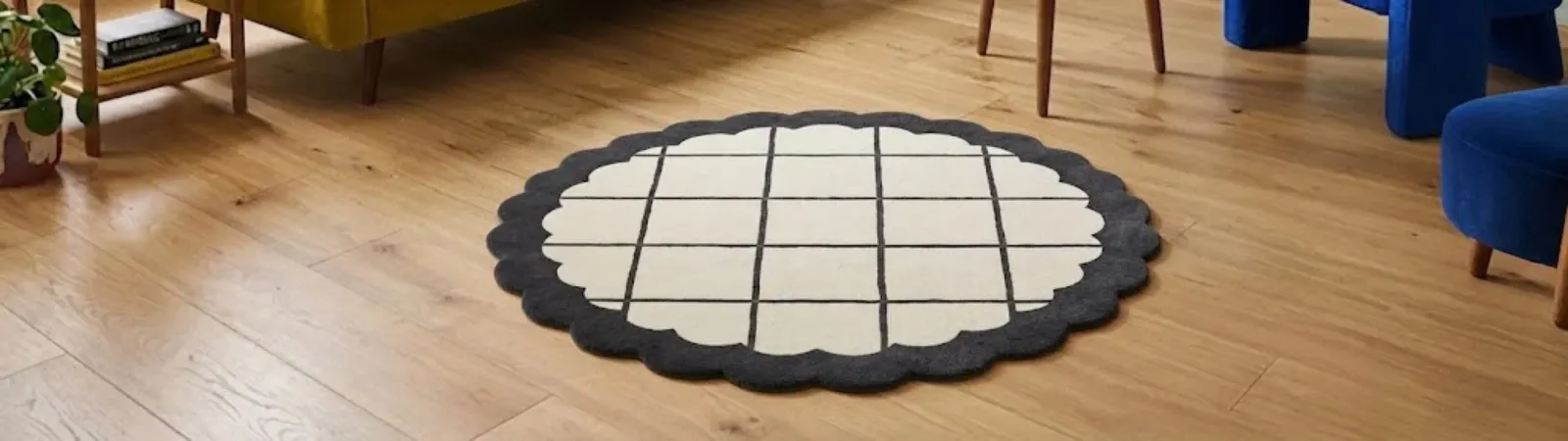
Why a Gray and White Rug Never Goes Out of Style
Why a Gray and White Rug Never Goes Out of Style Interior trends rarely last. A wall color or furniture
Picking a rug sounds simple until you’re standing in the middle of a room, wondering why nothing feels right. Nine times out of ten, it comes down to shape and style. If you’re weighing an irregular rug against a traditional one, this blog cuts through the noise so you can land on a decision that actually holds up.
An irregular rug is exactly what it sounds like. It’s a rug that doesn’t follow the usual rectangular, square, or oval rug template. Instead, it features unique silhouettes that may be curved, tapered, or entirely abstract.
Within that broad category, you’ll find irregular-grid hand-knotted wool rugs, irregular checkerboard rugs, and fully freeform shapes. They read more like floor-level pieces of art than a standard floor covering.
One thing worth clearing up early: irregular does not mean decorative-only or cheaply made. Many irregular area rugs in this category are hand-knotted. The shape may be unconventional, but the craftsmanship often remains deeply traditional.
Traditional rugs work within a familiar set of rules: rectangular rugs, round, or oval outlines. They have patterns rooted in specific weaving cultures, such as Persian, Moroccan Rugs, and Turkish. Symmetry is the backbone. Repeat motifs do the decorative heavy lifting. The result feels resolved, considered, finished.
That quality works well in rooms built with a similar deliberateness, such as formal dining rooms and living rooms. The problem shows up in spaces that lack that same sensibility. Take a heavily patterned traditional rug into a modern or eclectic interior. The rug starts competing with the furnishings instead of complementing them.
| Factor | Irregular Rug | Traditional Rug |
|---|---|---|
| Shape | Freeform, asymmetric, abstract silhouettes | Rectangular, round rugs, oval & highly geometric |
| Design Language | Contemporary, artistic, expressive | Heritage motifs, symmetrical repeat patterns |
| Best Decor Match | Modern, Scandi, eclectic, minimalist interiors | Classic, formal, bohemian, heritage-style rooms |
| Placement | High: corners, nooks, open-plan zones | Moderate; works best centered under furniture |
| Visual Impact | Immediate and sculptural | Refined and harmonious |
| Craft Options | Hand-knotted wool, tufted, flat-weave | Hand-knotted, hand-woven, machine-made |
| Styling Effort | Low: the shape does the work | Moderate; pattern coordination needed |
Room context shapes the decision more than personal taste alone. Here is a practical breakdown across the most common spaces:
| Room | Which Rug Style Works | Why |
|---|---|---|
| Living Room | Irregular Rug Wins | Irregular rugs for living rooms anchor seating zones without making the space feel prescribed. The shape naturally becomes part of the room’s visual conversation. |
| Formal Dining Room | Traditional Rug Wins | A rectangular traditional rug mirrors the table geometry and holds furniture in clean visual alignment. |
| Home Studio / Nook | Irregular Rug Wins | Irregular rug shapes define small zones within larger rooms, making a corner feel intentional and considered. |
| Bedroom | Either Works | Under-bed placement suits both styles. The choice comes down to whether you want calm symmetry or a more expressive morning view. |
| Hallway / Entryway | Irregular Rug Wins | An irregular area rug in an entryway signals character from the very first step inside — a strong first impression. |
| Minimalist Home | Irregular Rug Wins | Against bare walls and neutral tones, irregular rugs introduce texture and form without clutter or pattern overload. |
Most rug retailers treat shape as an afterthought. Scalloped Rugs start there. Every piece in the irregular rugs collection is chosen with modern interiors in mind. They are designed for spaces that deserve something more considered than a standard rectangle pulled from a catalog.
The range covers a wide variety of irregular rug shapes, including hand-knotted wool rugs with irregular grids, softer abstract rugs, and more. They work beautifully with a variety of interiors without sacrificing build quality. Each rug is selected for longevity, texture, and the kind of visual depth that only comes from skilled craft.
If you are unsure which direction suits your room, our team of experts is just a phone call away. You can connect with us for consultation.
Both styles have earned their place in the world of decor. The question is just whether they’ve earned it in yours. Traditional rugs bring a kind of settled, unhurried quality that works beautifully when the rest of the room shares that register. Irregular rugs do something different. They introduce shape as a design decision in itself, which tends to matter a lot in spaces that are otherwise playing it straight.
Either way, decide on shape before you think about size or color. It changes everything downstream. The Scalloped Rugs style guide is a good place to start.
Put the rug down before you move the furniture back. That order matters more than most people expect. Once the rug is in place, you can see where the natural edges fall and build the seating arrangement around that rather than forcing the rug to work around furniture that was already there.
In a living room, getting at least two sofa legs onto the rug stops the whole thing from looking like it floated in from another room.
In smaller nooks, let the outline do what it is designed to do: mark the space. You can also read our rug size guide to pick the perfect size & style.
Very much so, though they work better in some rooms than others. The recent wave of interest in craft, natural materials, and slower-made things has brought many people back to traditional weaving traditions.
Traditional rugs struggle in rooms that have already adopted a clean, contemporary aesthetic. Drop a densely patterned rug into that kind of space, and the two aesthetics argue rather than agree. Match the rug to the room’s actual language, and it holds up for decades.
Why a Gray and White Rug Never Goes Out of Style Interior trends rarely last. A wall color or furniture
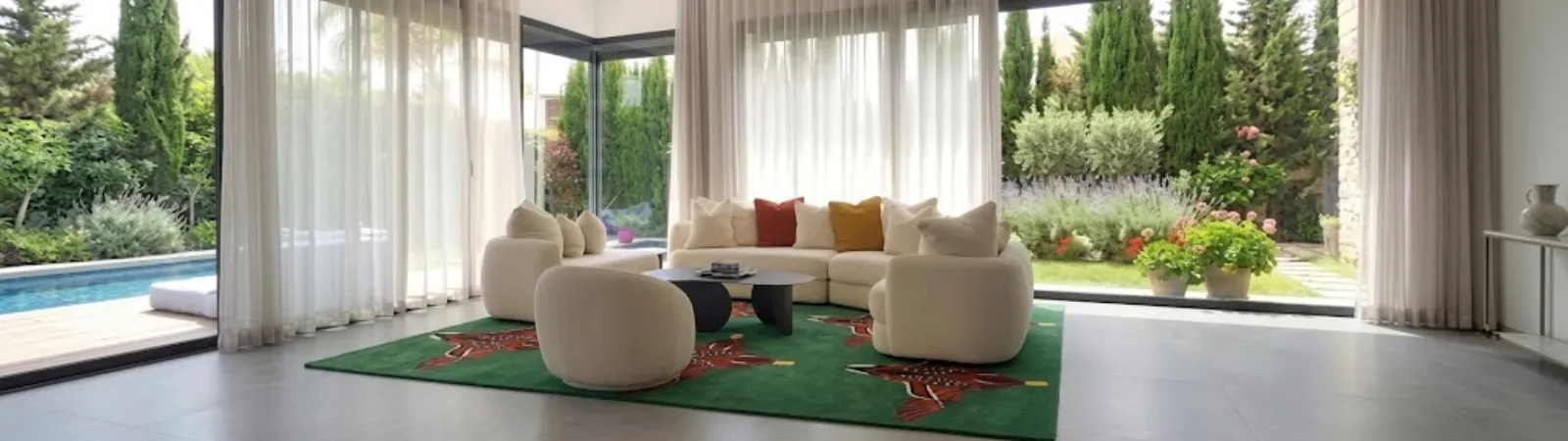
There’s a certain kind of room that photographs well but somehow forgets to feel like anyone lives there. Animal print
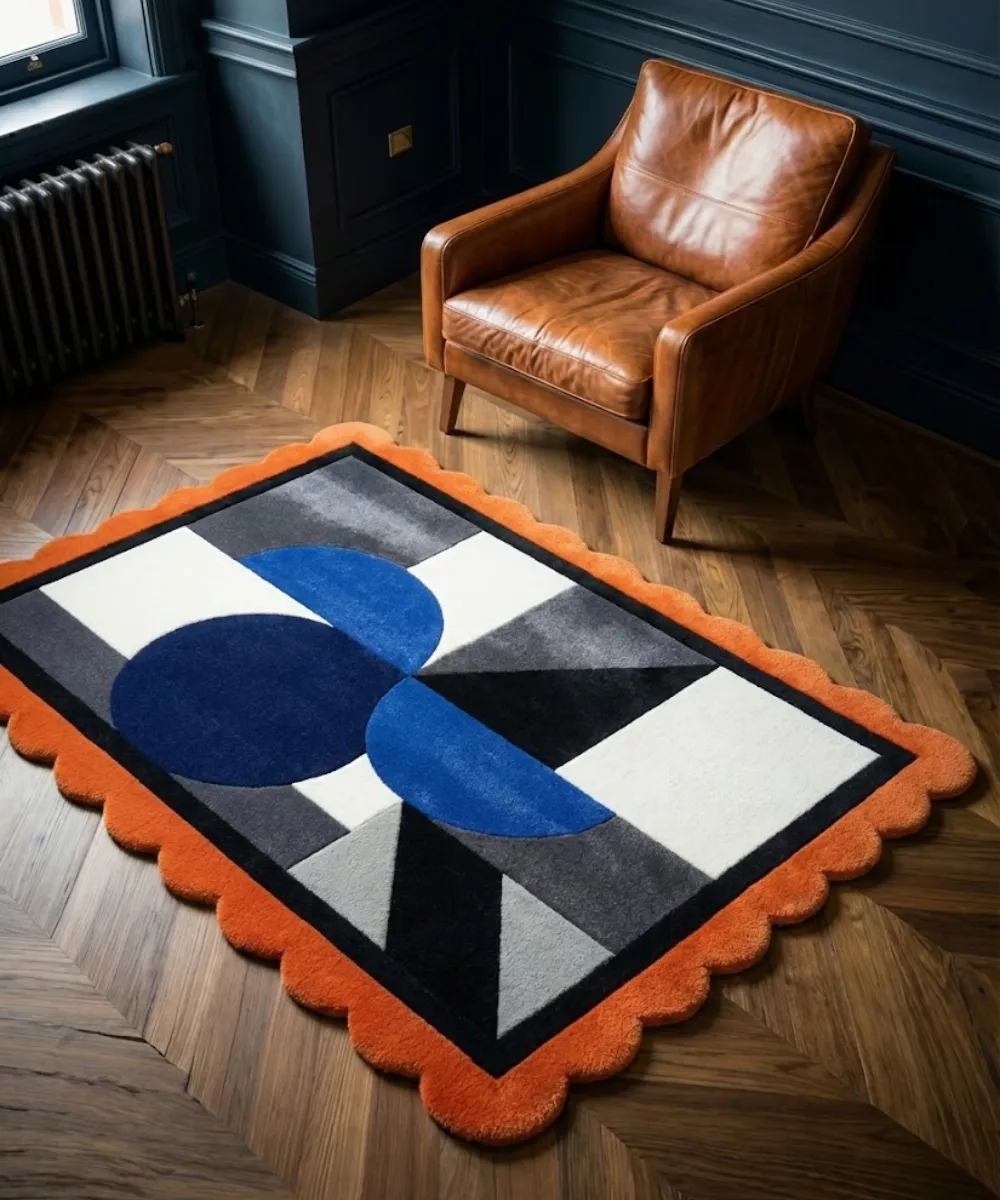
Elevate your living space with designer collections.
Get
Off on Your First Order