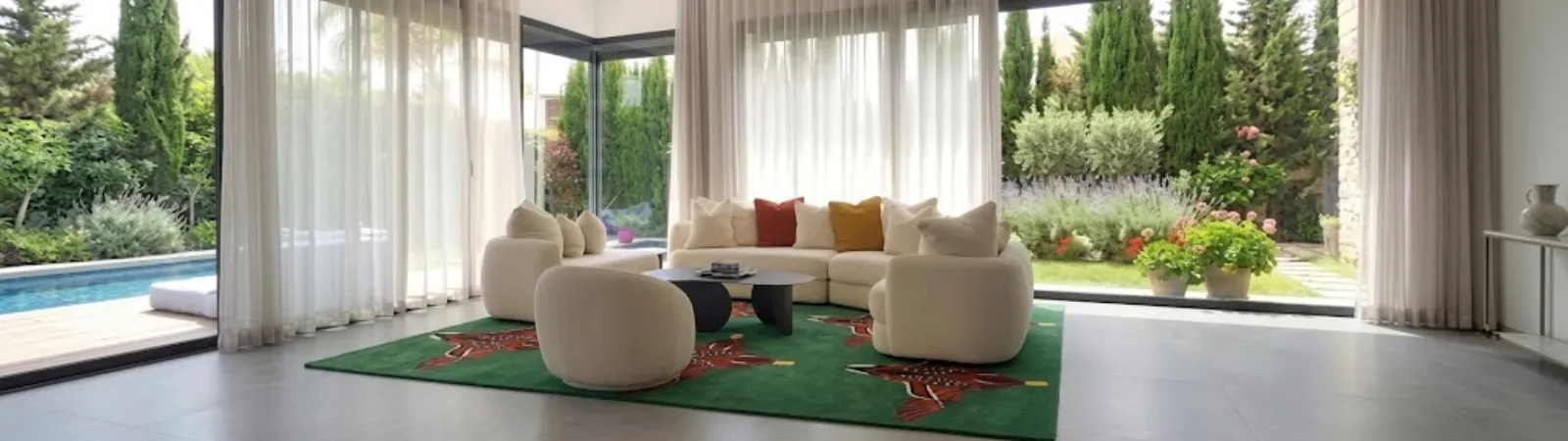
Animal Print Carpet Ideas for Living Rooms, Bedrooms & More
There’s a certain kind of room that photographs well but somehow forgets to feel like anyone lives there. Animal print
A lounge is only as good as the rug tying it together. The appropriate rug integrates the sofa, coffee table, and chairs into a unified space, whereas an unsuitable selection can create a disjointed appearance.
Lounge rug placement is often considered only after furniture selection. However, determining rug placement early in the design process is more effective, as it significantly influences the lounge’s overall atmosphere.
This guide will walk you through lounge rug ideas step by step. You’ll learn about sizing rules, designer-approved furniture placement styles, how to pick the right shape, and some ScallopedRugs options to consider after you know the basics.
In open-plan homes, rugs frequently delineate the boundary between the lounge and adjacent spaces such as the kitchen or hallway. In the absence of walls, the rug provides a defined edge for the seating area.
A rug also serves to protect flooring from the cumulative effects of daily foot traffic and the movement of sofas and coffee tables. Proper rug placement absorbs this wear, preserving the underlying floor surface.
Incorrect rug placement undermines both visual cohesion and functional protection. An undersized rug appears isolated and disrupts the arrangement of surrounding furniture. Improper alignment or positioning can cause the sofa to seem disconnected from the space. Even an appropriately sized rug may appear misplaced if not properly aligned with architectural features such as walls or windows.
These challenges can be addressed by adhering to established design principles that are based on furniture dimensions and standard clearances. Mastering these fundamentals simplifies subsequent decisions regarding rug size, placement, and shape.
Rug size is the primary consideration, as it influences all subsequent choices. It is advisable to determine the appropriate dimensions before selecting a color or a pattern.
Begin by referencing the sofa rather than the overall room dimensions. The rug should extend at least 6 to 12 inches beyond each end of the sofa, a guideline that prevents common sizing errors. For a standard three-seater sofa, this typically corresponds to an 8×10 or 9×12 rug.
Select a larger rug for sectionals or additional seating. For example, an L-shaped section or a lounge with a sofa and two accent chairs typically requires 12×15 area rugs to accommodate the entire seating group comfortably.
Maintain a consistent border of exposed flooring around the rug. After determining the appropriate rug size for the furniture, ensure there is a gap of 12 to 18 inches between the rug’s edge and the walls. Less than 12 inches can resemble wall-to-wall carpeting, while more than 18 inches may cause even a large rug to appear undersized.
Avoid selecting an undersized rug for compact lounges. A larger rug can visually expand a small room, whereas a smaller rug may make the space appear more confined. It is advisable to choose a generously sized option rather than defaulting to the smallest available.
Consider the total amount of furniture when selecting rug size. A lounge containing only a sofa and coffee table requires less coverage than one with additional chairs or a media console. When incorporating extra pieces, opt for a larger rug rather than extending a smaller one beyond its intended size. This is typically when larger rugs for lounge spaces become necessary.
The sizing principles for large rugs in lounge areas are comparable to those for living room layouts, as both require a rug sufficiently large to accommodate the entire seating group without crowding the edges.
After determining the appropriate rug size, placement typically follows one of three layout strategies. Each approach influences the seating group’s perception, and the optimal choice depends on the room configuration and furniture arrangement.
Rug shape, though frequently overlooked, significantly influences the overall perception of a lounge, comparable in impact to size or color.
Additional guidance on irregular area rugs is available for those seeking alternatives to standard shapes. Rug shape should be considered a distinct decision, as an inappropriate shape can undermine the effectiveness of even a well-sized and well-positioned rug.
A handful of pieces from the living room rugs collection suit lounge spaces particularly well, across a range of colors and shapes.
Getting your rug placement and lounge decisions right starts with the sizing and positioning covered above, but it only holds up in the long term if the rug itself is built to last. Every rug at ScallopedRugs is hand-tufted or hand-knotted with premium wool, which holds its shape better under furniture weight and daily foot traffic than mass-produced, machine-made alternatives.
Sizing is handled properly here, too. Beyond the standard 8×10 and 9×12 options, the collection includes large-sized area rugs and other oversized formats for larger lounges or open-concept layouts where a smaller rug simply won’t reach the furniture.
For households that want practicality alongside style, it’s worth checking the care guide for cleaning recommendations, since not every wool rug is treated the same as fully washable rugs. Knowing the difference up front avoids surprises once the rug is already in place.
Rug placement in a lounge area comes down to a short list of decisions: size the rug to the furniture rather than the room, pick a positioning style that matches how formal or relaxed you want the space to feel, and choose a shape that supports the furniture layout rather than fighting it. Get those three right, and the room comes together in a way that’s hard to achieve with lighting or accessories alone.
Whether you’re shopping for something large enough to anchor an open-concept lounge or something smaller and more considered for a cozy reading corner, the same principles apply. Start with the furniture, size generously rather than sparingly, and let shape and color do the rest.
There’s no single correct answer, since it depends on room size and how formal you want the space to look. The front-legs-on approach, where only the front legs of sofas and chairs rest on the rug, is the most common and forgiving option for most lounges. Larger, more formal rooms can support an all-legs-on layout, where the entire seating group sits on the rug.
As a general rule, a rug should extend at least 6 to 12 inches past each end of the sofa. For a more generous, designed look, extending it 12 to 24 inches past the sofa on each side works well in larger lounges with room to spare.
Start by measuring your seating group, not the room itself. A rug should be large enough that at least the front legs of every major piece of furniture sit on it. Most lounges fit on an 8×10 or 9×12 rug, while larger sectionals or open-concept spaces often need a 10×14 or 12×15 rug.
It depends on your existing furniture and flooring. A beige lounge rug or other light neutral works well against darker sofas or wood floors, since the contrast keeps the room from feeling heavy.
A brown lounge rug or other warm-toned option pairs naturally with leather seating and wood furniture, adding richness without competing with the room’s other colors.
Yes. Alongside traditional rectangular and round options, the collection includes organic and irregular shapes for lounges seeking a stronger visual statement. These modern lounge rugs work particularly well under curved sectionals or clustered accent chairs, where a strict rectangle would look out of place.
Start with size, using your furniture measurements as the guide, then narrow down by shape and color based on your existing decor. The living room rugs collection can be filtered by color, shape, and size, making it easier to compare options side by side, whether you’re looking for a large rectangular rug, a round accent piece, or a runner suited to a narrow lounge where a full-size area rug won’t fit.
There’s a certain kind of room that photographs well but somehow forgets to feel like anyone lives there. Animal print
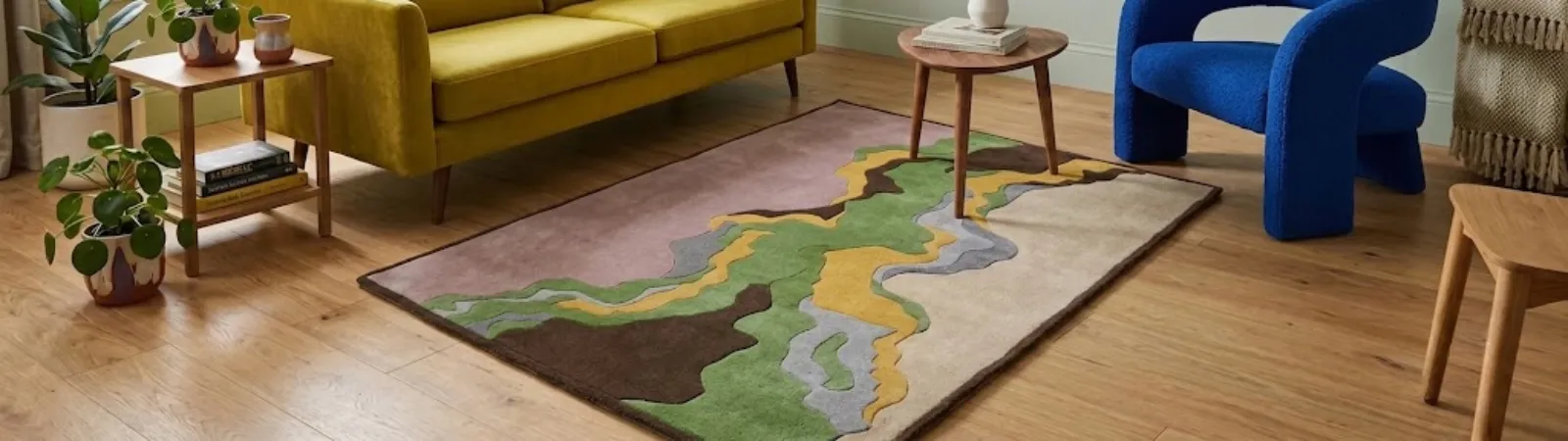
Most rooms don’t fall apart because the furniture is wrong. They fall apart because nothing on the floor is doing
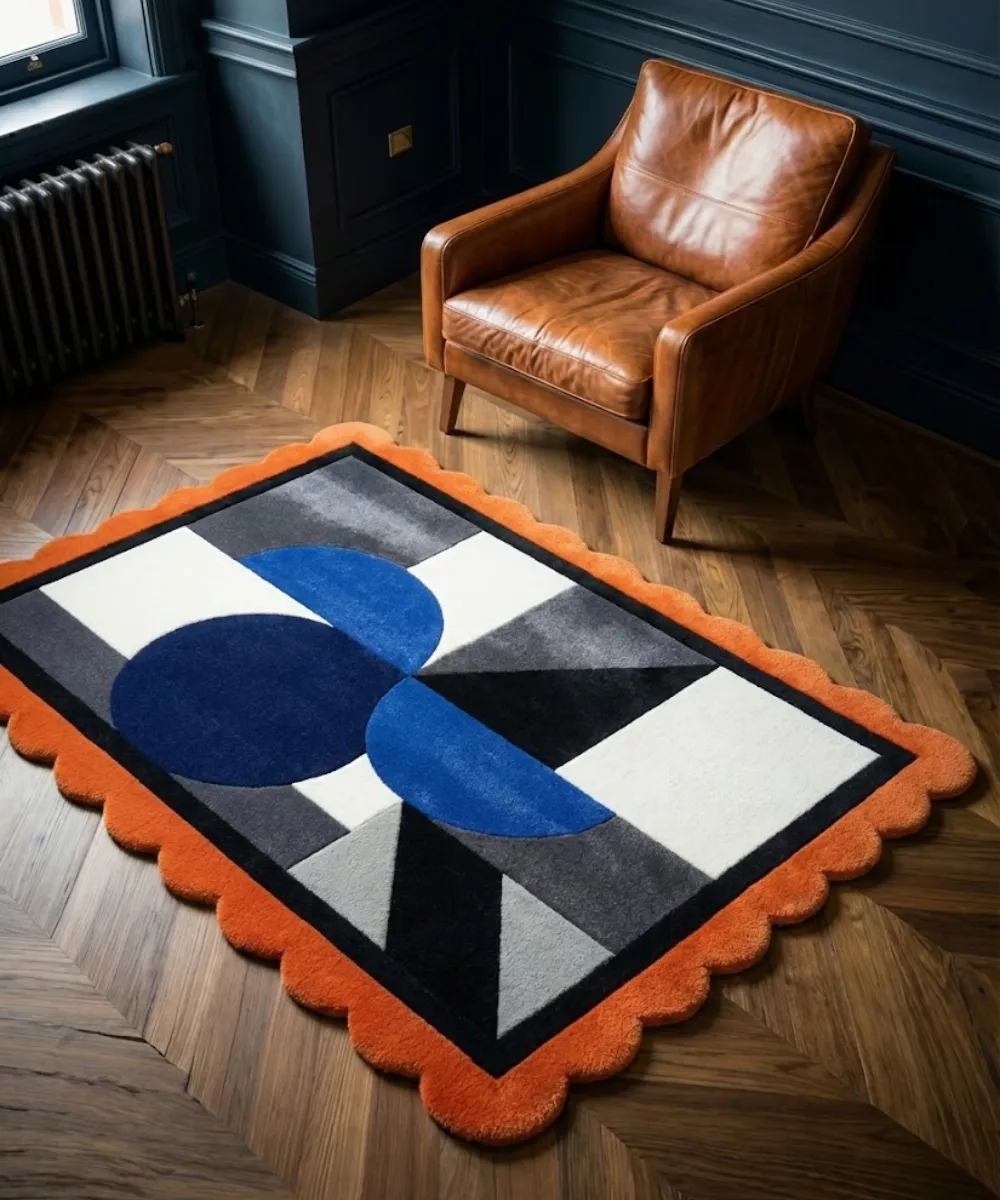
Elevate your living space with designer collections.
Get
Off on Your First Order