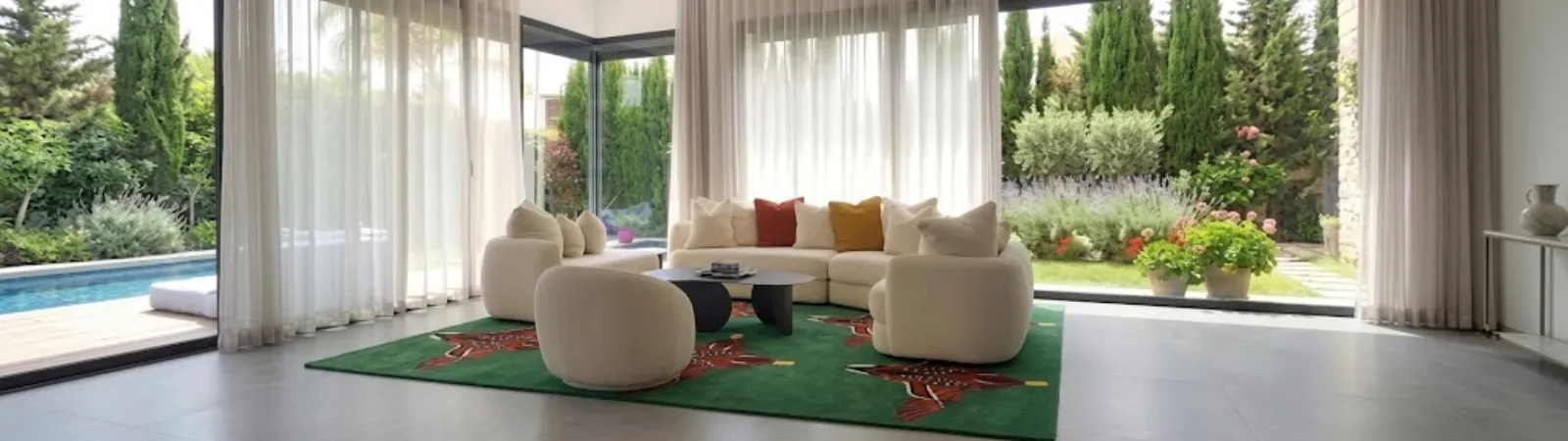
Animal Print Carpet Ideas for Living Rooms, Bedrooms & More
There’s a certain kind of room that photographs well but somehow forgets to feel like anyone lives there. Animal print
Most people pick a rug the same way they pick a paint color. They go with what’s safe. A rectangle in a neutral tone, sized to fit the furniture, job done. And for a long time, that was basically the only option available at most price points.
Lately, that’s changed. Unique-shaped rugs have moved from niche design curiosity to a genuine category that serious homeowners are paying attention to. They did not replace rectangles, but they did push people to ask more of their spaces and notice how underused the floor can be in any room.
This guide looks at what actually separates a unique-shaped rug from a standard area rug, why the difference matters more than it might seem, and how to figure out which one belongs in your home.
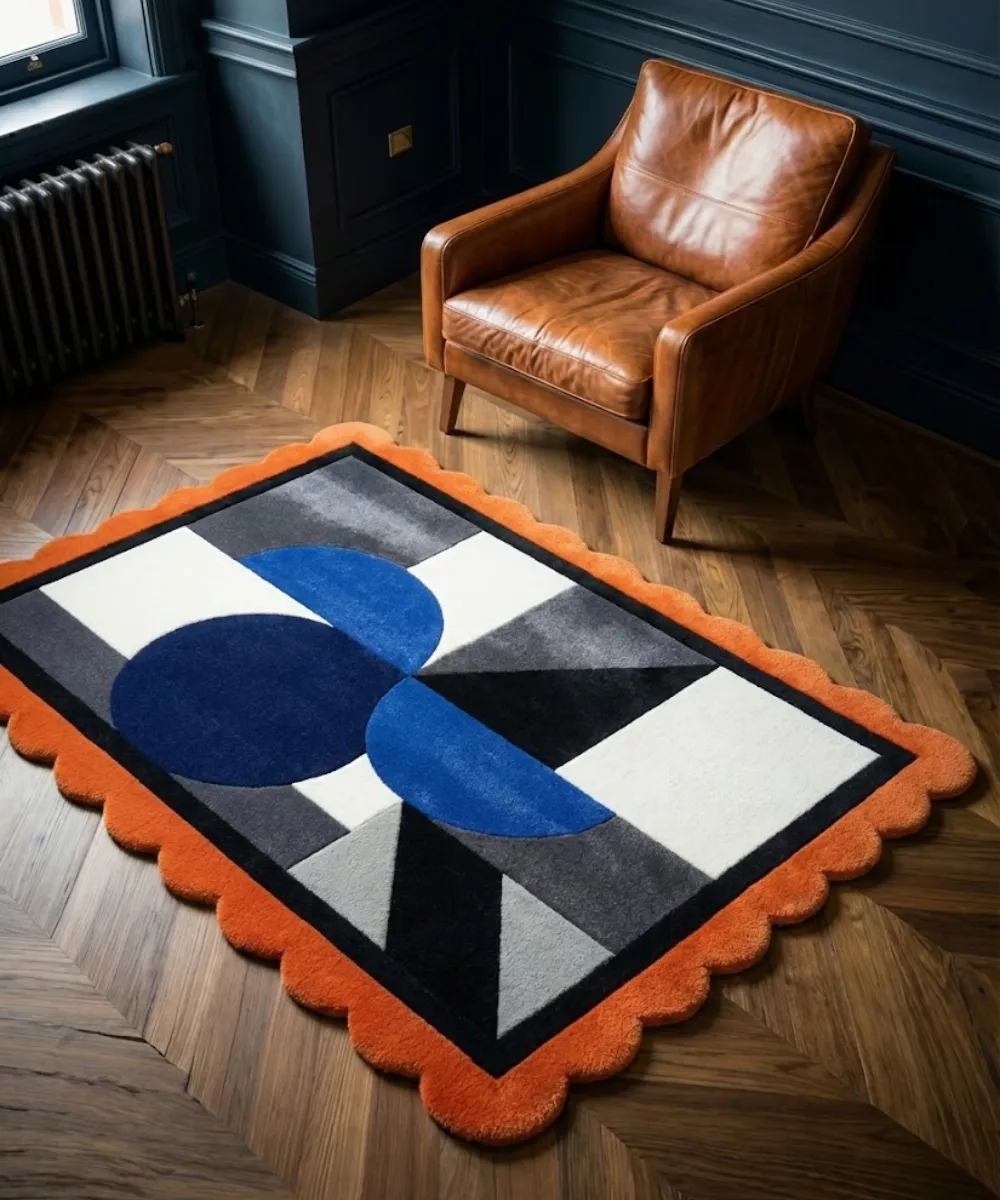
A unique-shaped rug is any rug that steps outside the conventional rectangular or square format. That includes scalloped edges, freeform silhouettes, irregular outlines, cloud shapes, asymmetric borders, and anything else that doesn’t follow a predictable geometric grid.
The category also goes by a few other names depending on where you look. Odd-shaped rugs, irregular rug shapes, unusual rugs—they’re largely referring to the same thing. A rug whose outline does something other than turn at right angles.
What all of these unique area rugs share is the effect they have on a room. They carry more visual weight than a standard rectangle. The outline becomes part of the design, not just a boundary around it.
Worth saying clearly: unique-shaped rugs aren’t a trend-chasing novelty. The best ones are made with the same craft and material quality as any well-made traditional rug. The shape is just one more considered decision in how the piece is built. Before buying, it helps to understand what you’re looking at. Our guide on what to know before buying odd-shaped rugs is a good place to start.
This is where it gets interesting, and where most buying guides skip the honest comparison.
A standard area rug is predictable in the best and worst sense of the word. It fits most rooms, works with most furniture arrangements, and rarely causes problems. You can size it easily, layer it without much thought, and replace it without redesigning anything around it. That dependability has real value.
But a rectangle is also passive. It occupies floor space. It doesn’t really add much to the room’s visual language. It just sits there, doing its job quietly.
A unique-shaped rug is a different proposition. Its outline actively shapes how a room feels. A scalloped edge softens a space full of hard furniture. A freeform silhouette breaks up a room that’s become too structured. An irregular border gives an open-plan layout a natural anchor point where a rectangle would divide it. For a proper side-by-side breakdown, our piece on irregular rugs vs traditional rugs covers the full comparison in detail.
The trade-off is real, though. Unique-shaped rugs require more thought upfront: placement, furniture around them, and how the shape works in that specific room. They reward that thought. A rectangle forgives less intention. A shaped rug asks you to be intentional, and the room looks better for it.
Discover unique-shaped rugs designed to make every room feel more creative and memorable.
The shift toward unique area rugs and interesting area rugs isn’t random. A few things have driven it.
The design conversation has moved away from the sharp grid-heavy aesthetic that dominated for a while. Interiors have gotten softer overall with curved furniture, arched doorways, and organic textures.
There’s also the focal point question. In rooms where the furniture is relatively simple or the walls are neutral, something needs to anchor the space visually.
A bold pattern on a rectangular rug can do that, but it comes with limits. It can overwhelm a room and date faster. A unique rug in a quieter colorway, with a distinctive shape, does the same anchoring work without those downsides. The shape carries the interest. The color can stay calm.
And then there’s the practical reality of open-plan living. Rectangular rugs in large open spaces often end up looking like they’re marking out a zone on a warehouse floor. A shaped rug, particularly a freeform or irregular one, defines an area more naturally. It looks placed rather than plotted.
For homeowners who want their spaces to feel genuinely designed rather than just furnished, unique area rugs are increasingly the answer. Shapes that surprise. Outlines that don’t follow the obvious path.
There’s more variety here than most people expect. Here’s a breakdown of the shapes worth knowing about.
ScallopedRugs built its entire range around uniquely shaped and irregular rugs. It’s not a category we add on the side; it’s one of the brand’s bestsellers.
The irregular-shaped rug collection covers a genuine range. Scalloped edges in multiple colorways, freeform silhouettes that don’t repeat themselves, and organic outlines that work across very different interior styles. The shapes are specific and deliberate. Each one is designed with a particular kind of room and placement in mind, not just cut to look different for the sake of it.
Every rug is hand-tufted in premium New Zealand wool, sometimes blended with viscose for designs where a bit of sheen makes sense. The construction is dense enough that the shaped edges hold their definition properly over time, which matters more than people realize. A poorly constructed, shaped rug loses its outline within a year of regular use. These don’t.
Custom sizing is also available across the range, which solves one of the more frustrating problems with shaped rugs: finding one that actually fits the space you have, rather than the space a standard template assumes you have. If you’re unsure where to begin with sizing, our rug sizes chart and guide take the guesswork out of it.
Add Artistic Character to Any Room
Discover distinctive rug designs that combine comfort with creativity.
A standard area rug fills a room. A uniquely shaped rug gives it something to say.
That’s the clearest way to put the difference. Both are functional. Both cover floor space. But one contributes to the room’s visual identity, and the other doesn’t. Once you’ve lived with odd-shaped rugs in a space, going back to a rectangle can feel like a step backward.
The decision doesn’t have to be complicated. Start with the room and think about what the shape needs to do. Does it need to soften, anchor, define, or contrast? Pick from there. Once you’re asking the right question, the right rug tends to be obvious.
There’s a certain kind of room that photographs well but somehow forgets to feel like anyone lives there. Animal print
Most rooms don’t fall apart because the furniture is wrong. They fall apart because nothing on the floor is doing
Elevate your living space with designer collections.
Get
Off on Your First Order